A "daisy chain" is a garland that can be made by threading several daisies together into a single loop that can be worn as a bracelet or a necklace. The term is also used to refer to a single chain of electronic devices working in concert or a series of load-bearing straps used to extend the length of a sling used to hold a rock climber.
The scriptures are full of verses that can be thread together to help us better understand the beauty, the harmony and the safeguards the gospel provides. For example, this week my family discovered this sequence beginning with King Benjamin teaching his people:
For the natural man is an enemy to God, and has been from the fall of Adam, and will be, forever and ever, unless he yields to the enticings of the Holy Spirit, and putteth off the natural man and becometh a saint through the atonement of Christ the Lord, and becometh as a child, submissive, meek, humble, patient, full of love, willing to submit to all things which the Lord seeth fit to inflict upon him, even as a child doth submit to his father (Mosiah 3:19).
And finally, I cannot tell you all the things whereby ye may commit sin; for there are divers ways and means, even so many that I cannot number them. But this much I can tell you, that if ye do not watch yourselves, and your thoughts, and your words, and your deeds, and observe the commandments of God, and continue in the faith of what ye have heard concerning the coming of our Lord, even unto the end of your lives, ye must perish. And now, O man, remember, and perish not (Mosiah 4:29-30).
Christ taught the same doctrine during his ministry:
At the same time came the disciples unto Jesus, saying, Who is the greatest in the kingdom of heaven? And Jesus called a little child unto him, and set him in the midst of them, And said, Verily I say unto you, Except ye be converted, and become as little children, ye shall not enter into the kingdom of heaven. Whosoever therefore shall humble himself as this little child, the same is the greatest in the kingdom of heaven (Matthew 18:1-4).
The Lord who is our Judge exalts those who choose to control their passions and submit their will to His, just as He knelt in submission to our Heavenly Father:
Then cometh Jesus with them unto a place called Gethsemane, and saith unto the disciples, Sit ye here, while I go and pray yonder. And he took with him Peter and the two sons of Zebedee, and began to be sorrowful and very heavy. Then saith he unto them, My soul is exceeding sorrowful, even unto death: tarry ye here, and watch with me.
And he went a little further, and fell on his face, and prayed, saying, O my Father, if it be possible, let this cup pass from me: nevertheless not as I will, but as thou wilt. And he cometh unto the disciples, and findeth them asleep, and saith unto Peter, What, could ye not watch with me one hour? Watch and pray, that ye enter not into temptation: the spirit indeed is willing, but the flesh is weak.
He went away again the second time, and prayed, saying, O my Father, if this cup may not pass away from me, except I drink it, thy will be done. And he came and found them asleep again: for their eyes were heavy. And he left them, and went away again, and prayed the third time, saying the same words. Then cometh he to his disciples, and saith unto them, Sleep on now, and take your rest: behold, the hour is at hand, and the Son of man is betrayed into the hands of sinners. Rise, let us be going: behold, he is at hand that doth betray me (Matthew 26:36-46).
This example is the preface of King Benjamin's teachings in Mosiah 3. In his words:
For behold, the time cometh, and is not far distant, that with power, the Lord Omnipotent who reigneth, who was, and is from all eternity to all eternity, shall come down from heaven among the children of men, and shall dwell in a tabernacle of clay, and shall go forth amongst men, working mighty miracles, such as healing the sick, raising the dead, causing the lame to walk, the blind to receive their sight, and the deaf to hear, and curing all manner of diseases. And he shall cast out devils, or the evil spirits which dwell in the hearts of the children of men.
And lo, he shall suffer temptations, and pain of body, hunger, thirst, and fatigue, even more than man can suffer, except it be unto death; for behold, blood cometh from every pore, so great shall be his anguish for the wickedness and the abominations of his people. And he shall be called Jesus Christ, the Son of God, the Father of heaven and earth, the Creator of all things from the beginning; and his mother shall be called Mary.
And lo, he cometh unto his own, that salvation might come unto the children of men even through faith on his name; and even after all this they shall consider him a man, and say that he hath a devil, and shall scourge him, and shall crucify him. And he shall rise the third day from the dead; and behold, he standeth to judge the world; and behold, all these things are done that a righteous judgement might come upon the children of men (Mosiah 3:5-10).
From Mosiah chapter 3 around the chain and back again, we can enjoy a richer study as we string verses of scripture together to better understand the gospel.
Showing posts with label natural man. Show all posts
Sunday, April 19, 2020
Friday, March 27, 2015
Be Ye Therefore Perfect
The Savior was just beginning his mortal ministry when he delivered “the greatest sermon ever given,” known to us as the Sermon on the Mount (Thomas S. Monson, April 1975). His teachings introduced a higher law than the Law of Moses and his authority astonished those that heard him preach (Matthew 5-7, 7:28-29). Among the guidance he gave to govern our lives was the charge to, “Be ye therefore perfect, even as your Father which is in heaven is perfect” (Matthew 5:48).
Taken at face value, this commandment is a concise summary of all the commandments and the divine plan of God for our happiness, immortality and exaltation. The Family: A Proclamation to the World explains that our physical bodies and our experiences on earth are given to us so that we might, “progress toward perfection and ultimately realize [our] divine destiny as heirs of eternal life”.
It is easy to feel overwhelmed by so large a task, particularly when we attempt to limit the Savior’s command to our own strength and our own timelines, as if it were some sort of academic exercise. When we slow down to consider the matter, there are at least three ways we can follow this ultimate commandment every day—and none of them happen instantly or in isolation.
First, we can take the Lord’s charge in context and understand that we are to be perfect in the thing which Christ had most recently taught. Just prior to the command to be perfect we read:
Ye have heard that it hath been said, Thou shalt love they neighbor, and hate thine enemy. But I say unto you, Love your enemies, bless them that curse you, do good to them that hate you, and pray for them which despitefully use you, and persecute you; That ye may be the children of your Father which is in heaven: for he maketh his sun to rise on the evil and on the good, and sendeth rain on the just and on the unjust (Matthew 5:44-45).
Loving God with all of our hearts and our neighbors as ourselves are the first and second great commandments, respectively, and laws upon which all others rely (Mathew 22: 34-40). As our Father in heaven loves all people perfectly, so in time must we learn to love as He loves. We are blessed in this endeavor to have the support and the challenges that come with building loving relationships with our families first, as well as others around us. We had a family before we were born and will be reunited with our loved ones after death if we make and keep temple covenants. Because the need to love perfectly will never subside,the journey we make with our families toward perfection spans far beyond our mortal existence.
Despite the help we receive from others and freedom from the constraints of time in our pursuit, clearly perfection requires effort from us. Paul admonished the Corinthians to, “examine yourselves, whether ye be in the faith; prove your own selves…. Be perfect, be of good comfort, be of one mind, live in peace; and the God of love and peace shall be with you” (2 Corinthians 13:5-11). Paul’s admonition challenges us to strive to become a more perfect being, more than but still very much a person filled with love, faith and a sound identity.
Paul's admonition refers to a broader sense of perfection where we are expected to not only love or believe or do perfectly but to be perfect beings. This is the source of perfect angst in many Sunday School classes, but such is the natural consequence of our own limited comprehension. Again we benefit from the realization that our pursuit will be neither short nor lonely. Speaking of perfection in this way, Elder Russell M. Nelson explained:
The term perfect was translated from the Greek teleios, which means ‘complete.’ … The infinitive form of the verb is teleiono, which means ‘to reach a distant end, to be fully developed, to consummate, or to finish.’ Please note that the word does not imply freedom from error; it implies achieving a distant objective.
We need not be dismayed if our earnest efforts toward perfection now seem so arduous and endless. Perfection is pending. It can come in full only after the Resurrection and only through the Lord. It awaits all who love him and keep his commandments (“Perfection Pending,” Ensign, Nov. 1996, 86, 88).
The Prophet Joseph Smith likened the pursuit of perfection to climbing a ladder as we learn each of the principles of the gospel. “But it will be a great while after you have passed through the veil before will have learned them,” he added. “It is not all to be comprehended in this world; it will be a great work to learn our salvation and exaltation even beyond the grave” (Teachings: Joseph Smith, 268).
Our great work is aided in this life by scripture guides that point the way. As Paul taught the Corinthians to “examine yourselves”, so Alma encouraged the people of Nephi to have personal interviews with themselves and provided some of the questions they might ask:
And now behold, I ask of you, my brethren of the church, have ye spiritually been born of God? Have ye received his image in your countenances? Have ye experienced this mighty change in your hearts?
Do ye exercise faith in the redemption of him who created you? Do you look forward with an eye of faith, and view this mortal body raised in immortality, and this corruption raised in incorruption, to stand before God to be judged according to the deeds which have been done in the mortal body? (Alma 5:14–15)
Dozens of other guides for personal measurement dot the scriptures and include, but are not limited to, the Ten Commandments, the scriptural gospel (faith, repentance, baptism for the remission of sins, the gift of the Holy Ghost, and enduring to the end), the Articles of Faith, and the Beatitudes, which the Savior uses to preface the call to perfection.
Of course, self-evaluation itself is seldom easy and requires honest soul-searching, personal pondering, sincere prayer, and a genuine relationship with the Savior. In a 2013 devotional, BYU statistics professor Shane Reese warned that a critical part of measuring ourselves is ensuring fairness in our assessments:
While some who try to make assessments of themselves will not hold themselves to a high enough standard, it is my experience that most are more inclined to be far too tough on themselves… As we make measurements of ourselves, we must be fair. In a generation that is dominated by knee-jerk reactions that can be sent around the globe in microseconds and by the instantaneous measurements that are meted out through social media, we are often lured into making judgments without data. The virtual world that comes with the miracles of technology have a side effect of masking “things as they really are" (Jacob 4:13).
Elder Uchtdorf taught that our ability to progress depends a great deal on our relationship with ourselves:
It may seem odd to think of having a relationship with ourselves, but we do. Some people can’t get along with themselves. They criticize and belittle themselves all day long until they begin to hate themselves. May I suggest that you reduce the rush and take a little extra time to get to know yourself better. Walk in nature, watch a sunrise, enjoy God’s creations, ponder the truths of the restored gospel, and find out what they mean for you personally. Learn to see yourself as Heavenly Father sees you—as His precious daughter or son with divine potential. (Ensign, November 2010, 22)
As we learn to examine ourselves we can make better choices that make our efforts more effective and efficient and bring us closer to the Savior and His perfection. No matter how well we become at evaluating and improving however, it is a serious mistake to think that we can reach our final destination—that we can become perfect—without help that only our Savior can provide.
The scriptures teach that those who inherit the Celestial Kingdom and live forever in the presence of God are just people who put forth considerable effort to develop faith to overcome life’s challenges and their own natures. Yet, ultimately, all of them are, “made perfect through Jesus the mediator of the new covenant, who wrought out this perfect atonement through the shedding of his own blood” (D&C 76:52-69).
Lest we are ever tempted to take too much credit, Isaiah, speaking Messianically, lays it out this way:
For I will send my servant unto you who are blind; yea, a messenger to open the eyes of the blind, and unstop the ears of the deaf; And they shall be made perfect notwithstanding their blindness, if they will hearken unto the messenger, the Lord’s servant (JST Isaiah 42:19-20).
Finally, the third way we can understand the Savior’s charge to, “be ye therefore perfect,” is to look at the precedent of law and use a little math.
The laws of God and many governments on earth dictate that two or more people bound by covenant or contract, such as marriage, can become one unit in the eyes of the law. A husband and wife can share a bank account, make significant medical decisions for each other and inherit property upon the death of their spouse.
Similarly, a company or other organization may benefit or be held responsible for the actions of a single employee bound to them by a contract of employment, even if that contract is implied. In the eyes of the law, individuals bound by covenant or contract can be seen as one unit-- one family or one organization.
This is important because all of us can enter into a covenant with Christ through baptism. As a bride takes on the name of her groom, so we covenant that we are willing to take upon ourselves the name of the Son, and in so doing we become as one unit with the only man in the history of the world that was and is and will always be perfect and perfectly worthy to live in the presence of God (D&C 20:77). As both the bride and the groom must agree to be married, so Christ too was baptized, bidding his astonished cousin to, “suffer it to be so now: for thus it becometh us to fulfill all righteousness” (Matthew 3:15).
And now the math. Because a married couple may be seen as one unit, they often share assets and liabilities-- they both own the house and are responsible for the mortgage. If instead of cash and debts we dealt in the currency of righteousness and sins, all of us are debtors. King Benjamin explained:
And now, in the first place, [God] hath created you, and granted unto you your lives, for which ye are indebted unto him. And secondly, he doth require that ye should do as he hath commanded you; for which if ye do, he doth immediately bless you; and therefore he hath paid you. And ye are still indebted to him, and are, and will be, forever and ever (Mosiah 2:23-24).
We cannot enter God's presence with the impure debt of sin and unity with Christ alone cannot wipe away that debt. This becomes clear if we conceptualize our sins as a negative number and Christ's perfection as 0, as in free from all sin. No matter the size of our debt these numbers cannot yield a positive outcome.
Paul taught that, “all have sinned, and come short of the glory of God” (Romans 3:23). Therefore, “it is expedient that there should be a great and last sacrifice; yea, not a sacrifice of man, neither of beast, neither of any manner of fowl; for it shall not be a human sacrifice; but it must be an infinite and eternal sacrifice” (Alma 34:10).
Again, conceptually, infinity plus or minus any number is still infinity. With Christ, sins of any collective magnitude do not diminish the value of his Atonement nor his capacity to forgive and strengthen each of us. He asks only that we fulfill our end of the baptismal covenant that binds us to Christ, washes our debts away with his His infinite surpluses, and allows us to be perfect today.
The primary importance of our unity with Christ as the means by which we may become perfect is illustrated in the Savior’s experience with Mary and Martha in Luke chapter 10. While Mary learned at the feet of the Savior and came closer to Him, Martha was “cumbered about much serving” and rushing, perhaps somewhat frantically, to be the perfect hostess for her guest. When Martha finally appealed to Jesus to encourage her sister to help, the Savior responded with love: “Martha, Martha, thou art careful and troubled about many things: But one thing is needful: and Mary hath chosen that good part, which shall not be taken away from her” (Luke 10:40-42).
How do we respond to the charge to be perfect even as our Father in heaven is perfect? Do we fill our schedules with activities that find us rushing frantically from one activity to another or do we take the time to get to know ourselves and build relationships with our Savior, our families, and those we serve? Are we harsh in our measurements of ourselves or do we strive to do our best and see our efforts as the Lord sees them? Do we trust in our Savior and cling to the covenants we have made or are we casual in our observance of the gospel and blinded by our own pride?
It is my testimony that we can live up to the Savior’s command to be perfect as we make and keep baptismal covenants today, strive for constant improvements until our journey is complete through the grace of Christ in the eternities to come, and do all we can to love one another and build positive relationships with those around us, particularly our families. We are, after all, bound to them as well and mutually bound to Christ— success for one of us, or for someone we home teach, or for those we serve-- is a success for all of us.
Indeed, as Paul taught the Romans, “the Spirit itself beareth witness with our spirit, that we are the children of God: And if children, then heirs; heirs of God, and joint-heirs with Christ; if so be that we suffer with him, that we may be also glorified together” (Romans 8:16-17).
Taken at face value, this commandment is a concise summary of all the commandments and the divine plan of God for our happiness, immortality and exaltation. The Family: A Proclamation to the World explains that our physical bodies and our experiences on earth are given to us so that we might, “progress toward perfection and ultimately realize [our] divine destiny as heirs of eternal life”.
It is easy to feel overwhelmed by so large a task, particularly when we attempt to limit the Savior’s command to our own strength and our own timelines, as if it were some sort of academic exercise. When we slow down to consider the matter, there are at least three ways we can follow this ultimate commandment every day—and none of them happen instantly or in isolation.
First, we can take the Lord’s charge in context and understand that we are to be perfect in the thing which Christ had most recently taught. Just prior to the command to be perfect we read:
Ye have heard that it hath been said, Thou shalt love they neighbor, and hate thine enemy. But I say unto you, Love your enemies, bless them that curse you, do good to them that hate you, and pray for them which despitefully use you, and persecute you; That ye may be the children of your Father which is in heaven: for he maketh his sun to rise on the evil and on the good, and sendeth rain on the just and on the unjust (Matthew 5:44-45).
Loving God with all of our hearts and our neighbors as ourselves are the first and second great commandments, respectively, and laws upon which all others rely (Mathew 22: 34-40). As our Father in heaven loves all people perfectly, so in time must we learn to love as He loves. We are blessed in this endeavor to have the support and the challenges that come with building loving relationships with our families first, as well as others around us. We had a family before we were born and will be reunited with our loved ones after death if we make and keep temple covenants. Because the need to love perfectly will never subside,the journey we make with our families toward perfection spans far beyond our mortal existence.
Despite the help we receive from others and freedom from the constraints of time in our pursuit, clearly perfection requires effort from us. Paul admonished the Corinthians to, “examine yourselves, whether ye be in the faith; prove your own selves…. Be perfect, be of good comfort, be of one mind, live in peace; and the God of love and peace shall be with you” (2 Corinthians 13:5-11). Paul’s admonition challenges us to strive to become a more perfect being, more than but still very much a person filled with love, faith and a sound identity.
Paul's admonition refers to a broader sense of perfection where we are expected to not only love or believe or do perfectly but to be perfect beings. This is the source of perfect angst in many Sunday School classes, but such is the natural consequence of our own limited comprehension. Again we benefit from the realization that our pursuit will be neither short nor lonely. Speaking of perfection in this way, Elder Russell M. Nelson explained:
The term perfect was translated from the Greek teleios, which means ‘complete.’ … The infinitive form of the verb is teleiono, which means ‘to reach a distant end, to be fully developed, to consummate, or to finish.’ Please note that the word does not imply freedom from error; it implies achieving a distant objective.
We need not be dismayed if our earnest efforts toward perfection now seem so arduous and endless. Perfection is pending. It can come in full only after the Resurrection and only through the Lord. It awaits all who love him and keep his commandments (“Perfection Pending,” Ensign, Nov. 1996, 86, 88).
Our great work is aided in this life by scripture guides that point the way. As Paul taught the Corinthians to “examine yourselves”, so Alma encouraged the people of Nephi to have personal interviews with themselves and provided some of the questions they might ask:
And now behold, I ask of you, my brethren of the church, have ye spiritually been born of God? Have ye received his image in your countenances? Have ye experienced this mighty change in your hearts?
Do ye exercise faith in the redemption of him who created you? Do you look forward with an eye of faith, and view this mortal body raised in immortality, and this corruption raised in incorruption, to stand before God to be judged according to the deeds which have been done in the mortal body? (Alma 5:14–15)
Dozens of other guides for personal measurement dot the scriptures and include, but are not limited to, the Ten Commandments, the scriptural gospel (faith, repentance, baptism for the remission of sins, the gift of the Holy Ghost, and enduring to the end), the Articles of Faith, and the Beatitudes, which the Savior uses to preface the call to perfection.
Of course, self-evaluation itself is seldom easy and requires honest soul-searching, personal pondering, sincere prayer, and a genuine relationship with the Savior. In a 2013 devotional, BYU statistics professor Shane Reese warned that a critical part of measuring ourselves is ensuring fairness in our assessments:
While some who try to make assessments of themselves will not hold themselves to a high enough standard, it is my experience that most are more inclined to be far too tough on themselves… As we make measurements of ourselves, we must be fair. In a generation that is dominated by knee-jerk reactions that can be sent around the globe in microseconds and by the instantaneous measurements that are meted out through social media, we are often lured into making judgments without data. The virtual world that comes with the miracles of technology have a side effect of masking “things as they really are" (Jacob 4:13).
Elder Uchtdorf taught that our ability to progress depends a great deal on our relationship with ourselves:
It may seem odd to think of having a relationship with ourselves, but we do. Some people can’t get along with themselves. They criticize and belittle themselves all day long until they begin to hate themselves. May I suggest that you reduce the rush and take a little extra time to get to know yourself better. Walk in nature, watch a sunrise, enjoy God’s creations, ponder the truths of the restored gospel, and find out what they mean for you personally. Learn to see yourself as Heavenly Father sees you—as His precious daughter or son with divine potential. (Ensign, November 2010, 22)
As we learn to examine ourselves we can make better choices that make our efforts more effective and efficient and bring us closer to the Savior and His perfection. No matter how well we become at evaluating and improving however, it is a serious mistake to think that we can reach our final destination—that we can become perfect—without help that only our Savior can provide.
The scriptures teach that those who inherit the Celestial Kingdom and live forever in the presence of God are just people who put forth considerable effort to develop faith to overcome life’s challenges and their own natures. Yet, ultimately, all of them are, “made perfect through Jesus the mediator of the new covenant, who wrought out this perfect atonement through the shedding of his own blood” (D&C 76:52-69).
Lest we are ever tempted to take too much credit, Isaiah, speaking Messianically, lays it out this way:
For I will send my servant unto you who are blind; yea, a messenger to open the eyes of the blind, and unstop the ears of the deaf; And they shall be made perfect notwithstanding their blindness, if they will hearken unto the messenger, the Lord’s servant (JST Isaiah 42:19-20).
Finally, the third way we can understand the Savior’s charge to, “be ye therefore perfect,” is to look at the precedent of law and use a little math.
The laws of God and many governments on earth dictate that two or more people bound by covenant or contract, such as marriage, can become one unit in the eyes of the law. A husband and wife can share a bank account, make significant medical decisions for each other and inherit property upon the death of their spouse.
Similarly, a company or other organization may benefit or be held responsible for the actions of a single employee bound to them by a contract of employment, even if that contract is implied. In the eyes of the law, individuals bound by covenant or contract can be seen as one unit-- one family or one organization.
This is important because all of us can enter into a covenant with Christ through baptism. As a bride takes on the name of her groom, so we covenant that we are willing to take upon ourselves the name of the Son, and in so doing we become as one unit with the only man in the history of the world that was and is and will always be perfect and perfectly worthy to live in the presence of God (D&C 20:77). As both the bride and the groom must agree to be married, so Christ too was baptized, bidding his astonished cousin to, “suffer it to be so now: for thus it becometh us to fulfill all righteousness” (Matthew 3:15).
And now the math. Because a married couple may be seen as one unit, they often share assets and liabilities-- they both own the house and are responsible for the mortgage. If instead of cash and debts we dealt in the currency of righteousness and sins, all of us are debtors. King Benjamin explained:
And now, in the first place, [God] hath created you, and granted unto you your lives, for which ye are indebted unto him. And secondly, he doth require that ye should do as he hath commanded you; for which if ye do, he doth immediately bless you; and therefore he hath paid you. And ye are still indebted to him, and are, and will be, forever and ever (Mosiah 2:23-24).
We cannot enter God's presence with the impure debt of sin and unity with Christ alone cannot wipe away that debt. This becomes clear if we conceptualize our sins as a negative number and Christ's perfection as 0, as in free from all sin. No matter the size of our debt these numbers cannot yield a positive outcome.
Paul taught that, “all have sinned, and come short of the glory of God” (Romans 3:23). Therefore, “it is expedient that there should be a great and last sacrifice; yea, not a sacrifice of man, neither of beast, neither of any manner of fowl; for it shall not be a human sacrifice; but it must be an infinite and eternal sacrifice” (Alma 34:10).
Again, conceptually, infinity plus or minus any number is still infinity. With Christ, sins of any collective magnitude do not diminish the value of his Atonement nor his capacity to forgive and strengthen each of us. He asks only that we fulfill our end of the baptismal covenant that binds us to Christ, washes our debts away with his His infinite surpluses, and allows us to be perfect today.
The primary importance of our unity with Christ as the means by which we may become perfect is illustrated in the Savior’s experience with Mary and Martha in Luke chapter 10. While Mary learned at the feet of the Savior and came closer to Him, Martha was “cumbered about much serving” and rushing, perhaps somewhat frantically, to be the perfect hostess for her guest. When Martha finally appealed to Jesus to encourage her sister to help, the Savior responded with love: “Martha, Martha, thou art careful and troubled about many things: But one thing is needful: and Mary hath chosen that good part, which shall not be taken away from her” (Luke 10:40-42).
How do we respond to the charge to be perfect even as our Father in heaven is perfect? Do we fill our schedules with activities that find us rushing frantically from one activity to another or do we take the time to get to know ourselves and build relationships with our Savior, our families, and those we serve? Are we harsh in our measurements of ourselves or do we strive to do our best and see our efforts as the Lord sees them? Do we trust in our Savior and cling to the covenants we have made or are we casual in our observance of the gospel and blinded by our own pride?
It is my testimony that we can live up to the Savior’s command to be perfect as we make and keep baptismal covenants today, strive for constant improvements until our journey is complete through the grace of Christ in the eternities to come, and do all we can to love one another and build positive relationships with those around us, particularly our families. We are, after all, bound to them as well and mutually bound to Christ— success for one of us, or for someone we home teach, or for those we serve-- is a success for all of us.
Indeed, as Paul taught the Romans, “the Spirit itself beareth witness with our spirit, that we are the children of God: And if children, then heirs; heirs of God, and joint-heirs with Christ; if so be that we suffer with him, that we may be also glorified together” (Romans 8:16-17).
Friday, November 9, 2012
Bridling Our Passions
Catholicism teaches of the Seven Deadly Sins: wrath, greed, sloth, pride, lust, envy and gluttony. These sins are considered the root of all other sin in Catholic doctrine and threaten the soul of an offender with eternal damnation because they destroy the grace and charity within a person. A person who is guilty can repent, however, and through the conversion of their heart and the gift of the sacrament they can regain the grace once lost.
Each of the Seven Deadly Sins is a concession of our will to the impulses and instincts of our physical bodies. The gospel of Jesus Christ teaches us that these impulses are not in themselves sinful. Paul taught that our bodies were sacred, not unlike a temple (1 Corinthians 3:16-17). They are a gift from God for our premortal valiance, a necessary tool in our progression on earth, and a part of our eternal reward as we are resurrected after death.
Indeed, our appetites can greatly benefit our overall wellness as they communicate to our consciousness which foods will satisfy our body's nutritional needs. Emotions add richness and depth to our lives as we mourn a lost friend, find pleasure in a job well done, gain trust others or even celebrate our team's game-winning score. Sex drive brings spouses together and preserves humankind. These and other impulses preserve our lives and and joy to our existence.
Yet, since the time of Adam, 'Satan hath come among the children of men, and tempteth them to worship him; and men have become carnal, sensual, and devilish, and are shut out from the presence of God' (Moses 6:49). If we allow our impulses to control our behavior, rather than training them to align with an overarching life mission to return to live with God and using our mind and will to make rational decisions, we surrender our agency to chance and submit our lives to be tossed to and fro by whatever cravings may come along.
For this reason, King Benjamin taught the people of ancient America that 'the natural man is an enemy to God, and has been from the fall of Adam, and will be, forever and ever, unless he yields to the enticings of the Holy Spirit' (Mosiah 3:19). Abinadi explained that 'he that persists in his own carnal nature, and goes on in the ways of sin and rebellion against God, remaineth in his fallen state and the devil hath all power over him. Therefore he is as though there was no redemption made, being an enemy to God; and also is the devil an enemy to God' (Mosiah 16:5).
As we look around our troubled world, many of the tragedies and social plagues we observe are the result of surrendering to the carnal demands of our undisciplined flesh. Obesity has become an epidemic that diminishes our ability to serve others by restricting our movement, endurance and lifespans. Large political rifts divide countries and harden hearts as powerful emotions crowd out the rational thoughts that would help us resolve our differences, adopt a common vision and cooperate to find real solutions. Broken homes, broken hearts and shattered dreams lie in the wake of the millions upon millions who have been shredded by infidelity, pornography, fornication, sexual perversions, sex crimes and other abhorrent sexual behavior that is too often complicated by abortions, domestic disputes, and the crushing weight of shame and guilt.
It is a relief to know that God has provided commandments to steer us away from the kinds of actions that would, sooner or later, lead to our own misery. Paul taught:
For they that are after the flesh do mind the things of the flesh; but they that are after the Spirit the things of the Spirit. For to be carnally minded is death; but to be spiritually minded is life and peace. Because the carnal mind is enmity against God: for it is not subject to the law of God, neither indeed can be. So then they that are after the flesh cannot please God. But ye are not after the flesh, but after the Spirit, if it so be that the Spirit of God dwell in you... For if ye live after the flesh, ye shall die: but if ye through the Spirit do subdue the deeds of the body, ye shall live (Romans 8:5-9, 13).
Like the boundaries of an athletic field, the laws of God help us keep our focus on the things we must do to be successful and happy in our lives. They do not prevent us from crossing the line; they only warn us that we cannot reach our goals or be successful in life if we do not keep ourselves in the field of play.
We remain 'in the game' as we heed the Lord's warning, given through his prophet, Alma, to 'bridle all [our] passions, that [we] may be filled with love'. A bridle on a horse does not debilitate a horse, but rather channels the horse's strength and power to move horse and rider toward their destination. We bridle our passions as we exercise discipline and focus our body's powerful appetites on doing good.
On the first Sunday of each month, we choose to fast for 24 hours and give of our incomes to the poor and afflicted. This bridle invigorates our spirits and gives us power to control our hunger.
We can combat carnal selfishness as we make conscious decisions to serve others. As with fasting, using the bridle of selfless service is often immediately rewarded with gratitude and joy.
Deciding to do good and exercising the willpower to follow through will provide many opportunities to bridle our passions and build spiritual strength. Consciously choosing virtuous thoughts can protect our souls from the threats of sexual sin. Putting aside a video game for a few days or leaving an inappropriate movie can provide an opportunity to find the same emotional satisfaction through a more meaningful activity. Staying productive will steer our souls through the temptations and carnal cravings that may seem louder when we are idle.
As we consciously choose to do right, our lives will be happy, our countenances will shine bright, and our carnal natures will give way to the divinity with us. The Lord taught Alma:
Marvel not that all mankind, yea, men and women, all nations, kindreds, tongues and people, must be born again; yea, born of God, changed from their carnal and fallen state, to a state of righteousness, being redeemed of God, becoming his sons and daughters; And thus they become new creatures; and unless they do this, they can in nowise inherit the kingdom of God.
If we will rise above the carnal natures represented by the Seven Deadly Sins and choose to use our agency to live righteous lives, we will be able to rejoice as Alma when he said: 'My soul hath been redeemed from the gall of bitterness and bonds of iniquity. I was in the darkest abyss; but now I behold the marvelous light of God. My soul was racked with eternal torment; but I am snatched, and my soul is pained no more' (Mosiah 27:25-29).
Each of the Seven Deadly Sins is a concession of our will to the impulses and instincts of our physical bodies. The gospel of Jesus Christ teaches us that these impulses are not in themselves sinful. Paul taught that our bodies were sacred, not unlike a temple (1 Corinthians 3:16-17). They are a gift from God for our premortal valiance, a necessary tool in our progression on earth, and a part of our eternal reward as we are resurrected after death.
Indeed, our appetites can greatly benefit our overall wellness as they communicate to our consciousness which foods will satisfy our body's nutritional needs. Emotions add richness and depth to our lives as we mourn a lost friend, find pleasure in a job well done, gain trust others or even celebrate our team's game-winning score. Sex drive brings spouses together and preserves humankind. These and other impulses preserve our lives and and joy to our existence.
Yet, since the time of Adam, 'Satan hath come among the children of men, and tempteth them to worship him; and men have become carnal, sensual, and devilish, and are shut out from the presence of God' (Moses 6:49). If we allow our impulses to control our behavior, rather than training them to align with an overarching life mission to return to live with God and using our mind and will to make rational decisions, we surrender our agency to chance and submit our lives to be tossed to and fro by whatever cravings may come along.
For this reason, King Benjamin taught the people of ancient America that 'the natural man is an enemy to God, and has been from the fall of Adam, and will be, forever and ever, unless he yields to the enticings of the Holy Spirit' (Mosiah 3:19). Abinadi explained that 'he that persists in his own carnal nature, and goes on in the ways of sin and rebellion against God, remaineth in his fallen state and the devil hath all power over him. Therefore he is as though there was no redemption made, being an enemy to God; and also is the devil an enemy to God' (Mosiah 16:5).
As we look around our troubled world, many of the tragedies and social plagues we observe are the result of surrendering to the carnal demands of our undisciplined flesh. Obesity has become an epidemic that diminishes our ability to serve others by restricting our movement, endurance and lifespans. Large political rifts divide countries and harden hearts as powerful emotions crowd out the rational thoughts that would help us resolve our differences, adopt a common vision and cooperate to find real solutions. Broken homes, broken hearts and shattered dreams lie in the wake of the millions upon millions who have been shredded by infidelity, pornography, fornication, sexual perversions, sex crimes and other abhorrent sexual behavior that is too often complicated by abortions, domestic disputes, and the crushing weight of shame and guilt.
It is a relief to know that God has provided commandments to steer us away from the kinds of actions that would, sooner or later, lead to our own misery. Paul taught:
For they that are after the flesh do mind the things of the flesh; but they that are after the Spirit the things of the Spirit. For to be carnally minded is death; but to be spiritually minded is life and peace. Because the carnal mind is enmity against God: for it is not subject to the law of God, neither indeed can be. So then they that are after the flesh cannot please God. But ye are not after the flesh, but after the Spirit, if it so be that the Spirit of God dwell in you... For if ye live after the flesh, ye shall die: but if ye through the Spirit do subdue the deeds of the body, ye shall live (Romans 8:5-9, 13).
Like the boundaries of an athletic field, the laws of God help us keep our focus on the things we must do to be successful and happy in our lives. They do not prevent us from crossing the line; they only warn us that we cannot reach our goals or be successful in life if we do not keep ourselves in the field of play.
We remain 'in the game' as we heed the Lord's warning, given through his prophet, Alma, to 'bridle all [our] passions, that [we] may be filled with love'. A bridle on a horse does not debilitate a horse, but rather channels the horse's strength and power to move horse and rider toward their destination. We bridle our passions as we exercise discipline and focus our body's powerful appetites on doing good.
On the first Sunday of each month, we choose to fast for 24 hours and give of our incomes to the poor and afflicted. This bridle invigorates our spirits and gives us power to control our hunger.
We can combat carnal selfishness as we make conscious decisions to serve others. As with fasting, using the bridle of selfless service is often immediately rewarded with gratitude and joy.
Deciding to do good and exercising the willpower to follow through will provide many opportunities to bridle our passions and build spiritual strength. Consciously choosing virtuous thoughts can protect our souls from the threats of sexual sin. Putting aside a video game for a few days or leaving an inappropriate movie can provide an opportunity to find the same emotional satisfaction through a more meaningful activity. Staying productive will steer our souls through the temptations and carnal cravings that may seem louder when we are idle.
As we consciously choose to do right, our lives will be happy, our countenances will shine bright, and our carnal natures will give way to the divinity with us. The Lord taught Alma:
Marvel not that all mankind, yea, men and women, all nations, kindreds, tongues and people, must be born again; yea, born of God, changed from their carnal and fallen state, to a state of righteousness, being redeemed of God, becoming his sons and daughters; And thus they become new creatures; and unless they do this, they can in nowise inherit the kingdom of God.
If we will rise above the carnal natures represented by the Seven Deadly Sins and choose to use our agency to live righteous lives, we will be able to rejoice as Alma when he said: 'My soul hath been redeemed from the gall of bitterness and bonds of iniquity. I was in the darkest abyss; but now I behold the marvelous light of God. My soul was racked with eternal torment; but I am snatched, and my soul is pained no more' (Mosiah 27:25-29).
Labels:
Alma,
body,
bridle,
carnal,
death,
emotion,
king benjamin,
moral discipline,
natural man,
obesity,
passions,
physical,
righteousness,
self-discipline,
sexual immorality,
sexual purity,
sin
Saturday, June 9, 2012
Be A Man!
In the most recent general conference, Elder Jeffrey R. Holland made an appeal to the men to, 'step up' and 'be men'. The call to 'be a man', colloquially and sometimes humorously used to motivate a burst of courage, was anything but a joke to Elder Holland.
What does it mean to be a man? The conclusion we come to may depend on who we ask. The world around us sends an ever-changing message on what manhood is. Not many years ago that message was based on grit, toughness and persistence. Clint Eastwood, Rocky Balboa and the generals of World War II were held up as 'real men'.
Now that image of manhood is considered cliche and old fashioned. The world's next attempt to define manhood pointed to the extremely successful-- the Bill Gates' of society who have every want satisfied with money to spare. Just as non-butch young men struggled with the previous definition of manhood, many in the rising generation have become discouraged by worldly pressures to provide an unrealistic level of income for themselves or their families.
Yet modern man, in the world's view, has evolved beyond the role of provider to something much less responsible. Elder D. Todd Christofferson explained it this way:
Some act as if man's highest goal should be his own pleasure. Permissive social mores have 'let men off the hook' as it were, so that many think it acceptable to father children out of wedlock and cohabit rather than marry. Dodging commitments is considered smart, but sacrificing for the good of others, naive.
The elusive, constantly changing messages of what the world calls manhood miss the target entirely and seek only to toss men 'to and fro with every wind of doctrine', as it were. These definitions attempt to restrict men to the selfish impulses of their carnal natures-- the very natures which stand in opposition to God (see Mosiah 3:19, Jeremiah 17:5, D&C 3:7, Moses 1:10).
So we're left again to ask what it means to be a man. The gospel of Jesus Christ provides a firm foundation upon which men can build their identity as men.
The scriptures teach that men are made in the image of God-- literal sons of God, eternal in nature and the focal point of God's glory. Men are called to be stewards over the whole earth and trusted to care for our sisters, daughters of the Most High. Every man has within himself the potential to be like our Heavenly Father, heirs of all He has and able to overcome every obstacle that may fall into our path. Real men, the gospel teaches, are mature, cheerful people who respond to the call to preside and provide.
Modern prophets also show the way to be a man. Elder Christofferson said, 'It is a wonderful aspiration for a boy to become a man--strong and capable; someone who can build and create things, run things; someone who makes a difference in the world.' Citing the proclamation on the family, he continued, 'In large measure, true manhood is defined in our relationship to women'. Real men honor marital vows with complete fidelity, help rear their children, preside with in love and righteousness and take responsibility to provide the necessities of life and protection for their families.
Elder Christofferson had a few more things to say about manhood:
Integrity is fundamental to being men. Integrity means being truthful, but it also means accepting responsibility and honoring commitments and covenants... A man of integrity will honestly face and correct his mistakes... True manhood is not always measured by the fruits of one's labors but by the labors themselves-- by one's striving. Though he will make some sacrifices and deny himself some pleasures in the course of honoring his commitments, the true man leads a rewarding life. He gives much, but he receives more, and he lives content in the approval of his Heavenly Father. The life of true manhood is the good life.
President Kimball once quoted U.S. President J. Edgar Hoover's answer to what makes a real man:
There are many things, but perhaps the inner voice he listened to as a young boy was most important of all. That voice we call conscience, and it directs one’s thoughts. What one thinks may find expression in actions. Since repeated actions form habits, the thoughts you are thinking and the things you are doing at this moment tend to reveal the kind of a man you will be.
What does it mean to be a man? The conclusion we come to may depend on who we ask. The world around us sends an ever-changing message on what manhood is. Not many years ago that message was based on grit, toughness and persistence. Clint Eastwood, Rocky Balboa and the generals of World War II were held up as 'real men'.
Now that image of manhood is considered cliche and old fashioned. The world's next attempt to define manhood pointed to the extremely successful-- the Bill Gates' of society who have every want satisfied with money to spare. Just as non-butch young men struggled with the previous definition of manhood, many in the rising generation have become discouraged by worldly pressures to provide an unrealistic level of income for themselves or their families.
Yet modern man, in the world's view, has evolved beyond the role of provider to something much less responsible. Elder D. Todd Christofferson explained it this way:
Some act as if man's highest goal should be his own pleasure. Permissive social mores have 'let men off the hook' as it were, so that many think it acceptable to father children out of wedlock and cohabit rather than marry. Dodging commitments is considered smart, but sacrificing for the good of others, naive.
The elusive, constantly changing messages of what the world calls manhood miss the target entirely and seek only to toss men 'to and fro with every wind of doctrine', as it were. These definitions attempt to restrict men to the selfish impulses of their carnal natures-- the very natures which stand in opposition to God (see Mosiah 3:19, Jeremiah 17:5, D&C 3:7, Moses 1:10).
So we're left again to ask what it means to be a man. The gospel of Jesus Christ provides a firm foundation upon which men can build their identity as men.
The scriptures teach that men are made in the image of God-- literal sons of God, eternal in nature and the focal point of God's glory. Men are called to be stewards over the whole earth and trusted to care for our sisters, daughters of the Most High. Every man has within himself the potential to be like our Heavenly Father, heirs of all He has and able to overcome every obstacle that may fall into our path. Real men, the gospel teaches, are mature, cheerful people who respond to the call to preside and provide.
Modern prophets also show the way to be a man. Elder Christofferson said, 'It is a wonderful aspiration for a boy to become a man--strong and capable; someone who can build and create things, run things; someone who makes a difference in the world.' Citing the proclamation on the family, he continued, 'In large measure, true manhood is defined in our relationship to women'. Real men honor marital vows with complete fidelity, help rear their children, preside with in love and righteousness and take responsibility to provide the necessities of life and protection for their families.
Elder Christofferson had a few more things to say about manhood:
Integrity is fundamental to being men. Integrity means being truthful, but it also means accepting responsibility and honoring commitments and covenants... A man of integrity will honestly face and correct his mistakes... True manhood is not always measured by the fruits of one's labors but by the labors themselves-- by one's striving. Though he will make some sacrifices and deny himself some pleasures in the course of honoring his commitments, the true man leads a rewarding life. He gives much, but he receives more, and he lives content in the approval of his Heavenly Father. The life of true manhood is the good life.
President Kimball once quoted U.S. President J. Edgar Hoover's answer to what makes a real man:
There are many things, but perhaps the inner voice he listened to as a young boy was most important of all. That voice we call conscience, and it directs one’s thoughts. What one thinks may find expression in actions. Since repeated actions form habits, the thoughts you are thinking and the things you are doing at this moment tend to reveal the kind of a man you will be.
Were I asked what a boy needs to do today in order to be a man
worthy of the name tomorrow, I would say: Never lie and never cheat. A
liar is a weakling. A cheat is both a weakling and a thief. In finding
the courage to honor truth in all things, you are on the way to
self-mastery.
Work
hard. Your mind is a storehouse and you stock the shelves. Stock them
with quality goods. Remember that the habits of work and study you form
today are the ones you will live with tomorrow.
Have
fun. Play active games which require stamina and sportsmanship. Abide
by the rules yourself. Demand that others do likewise.
Honor
your Creator. God is the source of all good. The ideals on which the
nation is founded stem from him who is the author of Liberty. You can
express appreciation for your priceless heritage best by living
according to the code of ‘Duty, Honor, Country, and God.’
If
you do these, and in all things do your best, the mind and heart and
soul you develop will one day be those of a real man.
These are the ideals of manhood: integrity, kindness, strength, honor and duty.
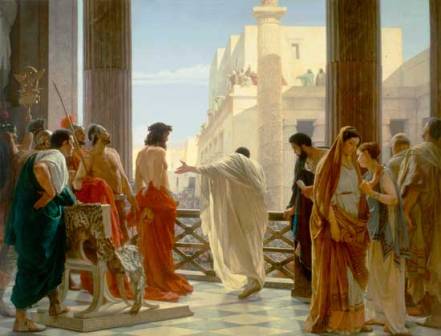
Manhood finds its ultimate expression in our ultimate example. Pilate may not have understood the significance of his words when he brought Jesus forth wearing a crown of thorns and declared, 'Behold the man!' As Elder Christofferson taught, Christ showed us the way to be men by rejecting temptation, by obedience, by forsaking completely the 'natural man', by service, by fearless opposition to evil and error and by standing firm in defending sacred things and raising a warning voice.
As once Lehi called upon his sons to awake and rise from the dust and be men, so the prophets of today have called upon the men of our generation to 'step up'. President Monson has reminded us that we are not spectators. Elder Bednar counseled that when men 'neglect to do what is necessary to qualify for priesthood power' their efforts are 'unnaceptable to the Lord'. Elder Uchtdorf called upon men to put into practice dormant doctrines-- those that lie in our hears yet unapplied in our lives-- to qualify ourselves as husbands, fathers and sons.
Rise up, O men of God!
Have done with lesser things.
Give heart and soul and mind and strength
To serve the King of Kings.
Rise up, O men of God,
In one united throng.
Bring in the day of brotherhood
And end the night of wrong.
Rise up, O men of God!
Tread where his feet have trod.
As brothers of the Son of Man,
Rise up, O men of God!
Sunday, May 22, 2011
How Firm a Foundation
In Mark chapter 10, we read of a noble, rich man that inquires of Christ, "What shall I do that I may inherit eternal life?" Finding that the man had kept the commandments from his youth, the Savior instructed the rich young man to, "go thy way way, sell whatsoever thou hast, and give to the poor... and come, take up the cross, and follow me." Though we do not know if or when this young man may have obeyed, at the time of his encounter with Christ he, "went away grieved: for he had great possessions."
Turning to his disciples, the Master Teacher commented, "how hard is it for them that trust in riches to enter into the kingdom of God!" Then again, "With men that trust in riches, it is impossible [to enter into the kingdom of God]; but not impossible with men who trust in God and leave all for my sake, for with such all these things are possible."
Honest self-evaluation may reveal to each of us what we may have in common with the young rich man. It is easy to feel like everything will be okay because the bills are paid with money left over for groceries and maybe even some savings. Do we pray more sincerely when our cash reserves are low?
The principle behind what Christ taught the young, rich man is taught more explicitly by King Benjamin in Mosiah chapter 3: "There shall be no other name given nor any other way nor means whereby salvation can come unto the children of men, only in and through the name of Christ, the Lord Omnipotent." Faith in Christ is the first principle of the gospel and absolutely essential to salvation in the kingdom of God. When we place our trust elsewhere, we introduce false idols and false security into our lives. We become like the foolish man, who built his house upon a sandy foundation.
Even the mention of idol worship conjures up ideas of gold calves made thousands of years ago or the neighbor that is always out in his front yard washing his new car. Yet when tragedy strikes or stress mounts, where do you and I turn? If we look for comfort in a batch of freshly baked cookies or retreat to the chocolate stash in our dresser drawers, we may well find that sweet treats have hindered or even replaced the deepest, most sincere trust in God that is required to return to Him.
Riches of cash or of calories are not alone in their ability to replace our faith with false security. Some create idols of intimacy, of drugs or alcohol, and still others trust most in their own education, their favorite sports team, the power of their preferred political party or their ability to control or influence those around them. When we put our trust in these things more than God-- when we turn to them in our difficult moments rather than to our Heavenly Father who waits to teach us and to bless us-- it is as though each of us were departing from the Savior just as the young rich man.
Victory over this form of idolatry requires a healthy dose of humility. We must change our thinking from, "What do I want to do?" to "What would the Lord have me do?" We recognize that the comfort we find in idolatrous trust of money or food or whatever allows the natural man to gain strength; so we strive to "yield to the enticings of the Holy Spirit" that put off the natural man as they help us become, "submissive, meek, humble, patient, full of love, [and] willing to submit to all things which the Lord seeth fit to inflict upon [us]" (Mosiah 3:19). In other words, as we find success and refinement in humility, we will also develop a deep and abiding faith in our Savior, Jesus Christ.
The Lord has promised that he will care for our needs, "for your heavenly Father knoweth that ye have need of all these things" (3 Nephi 13:32). Our job is to believe him-- believe he will do what he says he will do-- then take up our cross and build upon his firm foundation.
Turning to his disciples, the Master Teacher commented, "how hard is it for them that trust in riches to enter into the kingdom of God!" Then again, "With men that trust in riches, it is impossible [to enter into the kingdom of God]; but not impossible with men who trust in God and leave all for my sake, for with such all these things are possible."
Honest self-evaluation may reveal to each of us what we may have in common with the young rich man. It is easy to feel like everything will be okay because the bills are paid with money left over for groceries and maybe even some savings. Do we pray more sincerely when our cash reserves are low?
The principle behind what Christ taught the young, rich man is taught more explicitly by King Benjamin in Mosiah chapter 3: "There shall be no other name given nor any other way nor means whereby salvation can come unto the children of men, only in and through the name of Christ, the Lord Omnipotent." Faith in Christ is the first principle of the gospel and absolutely essential to salvation in the kingdom of God. When we place our trust elsewhere, we introduce false idols and false security into our lives. We become like the foolish man, who built his house upon a sandy foundation.
Even the mention of idol worship conjures up ideas of gold calves made thousands of years ago or the neighbor that is always out in his front yard washing his new car. Yet when tragedy strikes or stress mounts, where do you and I turn? If we look for comfort in a batch of freshly baked cookies or retreat to the chocolate stash in our dresser drawers, we may well find that sweet treats have hindered or even replaced the deepest, most sincere trust in God that is required to return to Him.
Riches of cash or of calories are not alone in their ability to replace our faith with false security. Some create idols of intimacy, of drugs or alcohol, and still others trust most in their own education, their favorite sports team, the power of their preferred political party or their ability to control or influence those around them. When we put our trust in these things more than God-- when we turn to them in our difficult moments rather than to our Heavenly Father who waits to teach us and to bless us-- it is as though each of us were departing from the Savior just as the young rich man.
Victory over this form of idolatry requires a healthy dose of humility. We must change our thinking from, "What do I want to do?" to "What would the Lord have me do?" We recognize that the comfort we find in idolatrous trust of money or food or whatever allows the natural man to gain strength; so we strive to "yield to the enticings of the Holy Spirit" that put off the natural man as they help us become, "submissive, meek, humble, patient, full of love, [and] willing to submit to all things which the Lord seeth fit to inflict upon [us]" (Mosiah 3:19). In other words, as we find success and refinement in humility, we will also develop a deep and abiding faith in our Savior, Jesus Christ.
The Lord has promised that he will care for our needs, "for your heavenly Father knoweth that ye have need of all these things" (3 Nephi 13:32). Our job is to believe him-- believe he will do what he says he will do-- then take up our cross and build upon his firm foundation.
How firm a foundation, ye saints of the Lord,
is laid for your faith in his excellent word.
What more can he say than to you he hath said,
who unto the Savior for refuge hath fled?
In every condition, in sickness, in health,
in poverty's vale or abounding in wealth,
at home or abroad, on the land or the sea
as thy days may demand so thy succor shall be.
Fear not, I am with thee; oh, be not dismayed,
for I am thy God and will still give thee aid.
I'll strengthen thee, help thee, and cause thee to stand,
upheld by my righteous, omnipotent hand.
When through the deep waters I call thee to go,
the rivers of sorrow shall not thee o'erflow,
for I will be with thee, thy troubles to bless
and sanctify to thee thy deepest distress.
When through fiery trials thy pathway shall lie,
my grace, all sufficient, shall be thy supply.
The flame shall not hurt thee; I only design
thy dross to consume and thy gold to refine.
E'en down to old age, all my people shall prove
my sov'reign, eternal, unchangable love;
and then when gray hair shall their temples adorn,
like lambs shall they still in my bosom be borne.
The soul that on Jesus hath leaned for repose
I will not, I cannot, desert to his foes;
that soul, though all hell should endeavor to shake,
I'll never, no never, no never forsake.
(How Firm a Foundation, attr. to Robert Keen, 1787)
Subscribe to:
Posts (Atom)