Showing posts with label world. Show all posts

Monday, November 11, 2019

Lost and Found

"Black Sheep" by Julie Rogers
In the fifteenth chapter of Luke, as elsewhere in the New Testament, orthodox Pharisees murmured about Jesus Christ's interactions with sinners. They disapproved of his willingness to receive and share a dinner table with those they considered unclean and lost souls.

Christ responded to the Pharisees' criticism in this instance with three parables. In the first, a shepherd leaves his flock of 99 sheep to find one that had wandered off. The second parable is about a woman who lit a candle and cleaned her house to find a coin that she had lost. Finally, the Parable of the Prodigal Son tells of a son who wastes his inheritance with riotous living but is received with joy when he returns to his father's house.

Each of these parables is really about lost souls. It is instructive to note that the sheep, the coin and the prodigal son were each lost in a different way. The sheep wandered from its flock, perhaps not even noticing it was drifting from the others until it couldn't easily find the way back. The coin was lost because of the neglect or insufficient caution of someone else, not unlike the effect a wayward parent may have on their children. The Prodigal Son rejected his father's counsel and became lost through his own rebellion.

The parables illustrate how the sheep, the coin and the prodigal son were also found in different ways. The sheep that wandered into the wilderness was in the stewardship of a shepherd. "Wilderness" in the scriptures is often symbolic for "the world". The Joseph Smith translation of these verses clarifies that the shepherd left his flock of sheep in a safe place (not in the wilderness) and then went into the wilderness to search for the lost sheep. In a similar way, we may have opportunities to minister to those in our stewardship who have drifted away from gospel activity. Our efforts will be to bring those who are lost in worldly living back into the relative safety of the church. With this story, Christ is directly admonishing the Pharisees, who had a direct ecclesiastical responsibility for the lost souls they so disdained.

In the second story, the woman who lost a coin put nine other coins in a safe place before searching for her missing piece of silver. In this case, the woman was directly responsible for losing one of the coins and finding it required more light and a cleansing process. If we lead others away from Christ, we must repent and do all we can to restore their faith and standing before him. As we seek the Savior's influence in our lives he can provide direction and inspiration that will help us find those we have lost. This story was also an invitation to the Pharisees to search within themselves and fill their lives with light so they could find truth.

Finally, the Prodigal Son had to search within himself until he "came to himself" and desired to return to his father. He had known what was right and chose to waste his inheritance living contrary to that knowledge. It also had to be his choice to humbly return to the home of his father.

In every case, there is rejoicing when what was lost is found. "Joy shall be in heaven over one sinner that repenteth," the Lord taught as a lesson of the lost sheep's return to the flock. When the woman finds the lost coin, she rejoices with her neighbors and the Savior says that the angels of heaven rejoice as well. Those angels exult because of their devotion to the Savior, but also because they are our friends and family, our parents, grandparents, brothers and sisters. Of course they rejoice, just as the Father rejoices at the return of the prodigal son and hosts a celebration in his honor.

In the end, the sheep, the coin and the prodigal son are all restored to the place where they had been before they were lost. Unlike the sheep and the coin however, the father of the prodigal son explains to a more faithful posterity that the prodigal's inheritance cannot be restored. This cautionary note seems to say that though we may repent in the spirit world after death, our inheritance cannot be restored at that point. We may live with God again, a fact worth great rejoicing, but we cannot inherit eternal life nor inhabit the highest degree of His Celestial Kingdom. In the parable, the son who had been faithful and kept his inheritance is told that he will inherit "all that [the Father]" has.

The Lord taught Abraham, "And they who keep their first estate shall be added upon; and they who keep not their first estate shall not have glory in the same kingdom with those who keep their first estate; and they who keep their second estate shall have glory added upon their heads forever and ever" (Abraham 3:26). In the context of this verse, our mortal lives are our second estate. We can waste them with a Vegas lifestyle or addicted to various things, like the prodigal; but life can also slip away into distraction and passivity, indecision and apathy. It isn't enough to not be bad-- we must be good, like the faithful son who worked for his father all of his life.

The three parables about the lost speak to each of us as both sinners and rescuers. At times, all of us begin to wander from what we know is right. Perhaps we do not pray or study our scriptures for a time. We rely too heavily on ourselves and what we want to do. We are offended by someone at church or choose to do things we know are wrong because they seem fun or pleasurable or impressive to others. We are all charged of God with seeking for those who are lost.

This is true socially and within ourselves. In the depths of our hearts, we sometimes find that individual elements of our testimonies of the gospel may be lost for a time. If we do not fast or pray, we may lose our testimonies of the power of fasting and prayer. Sometimes elements of our testimonies may drift almost undetected. At other times, we may consciously battle with difficult questions about church history, gospel doctrine, life challenges or current events. It is in these times that we most need to light a candle in our lives, repenting and inviting Christ's presence to shine more brightly within us so we can see clearly to find what we have lost.

The Lord calls all of us to watch after those in our stewardship. Whether sharing the gospel with those wandering without a knowledge of the truth or finding those who have wandered, great joy is in store for those who do the Lord's work.

"Remember the worth of souls is great in the sight of God;" the Savior said. "Wherefore, you are called to cry repentance unto this people. And if it so be that you should labor all your days in crying repentance unto this people, and bring, save it be one soul unto me, how great shall be your joy with him in the kingdom of my Father! And now, if your joy will be great with one soul that you have brought unto me into the kingdom of my Father, how great will be your joy if you should bring many souls unto me!" (D&C 18:10, 14-16).

Christ invited the Pharisees to seek after the lost so that one day they could rejoice together at the Lord's table. He invites us to continue his work so that we can join Him and his angels when they kill the fatted calf for a great celebration of our return into His presence.

Sunday, August 13, 2017

Withdrawing to the Wilderness

Sometimes after a busy day there's nothing better than sitting on the couch watching your favorite television show. Taking a few minutes to relax can take our minds off of the things that are causing our stress and rejuvenate our strength so we can finish out the day. But then sometimes we finish a television show with the same lingering feeling we might have when we just got home from vacation and realize we really need a vacation. So, of course, we watch another unsatisfying episode and another until we're so exhausted we can't help but fall asleep.

The average American watches about five hours of television per day. If we count the media we consume on tablets and phones, that number spikes to 10 hours and 39 minutes of screen time each and every day (The Total Audience Report: Q1 2016, Nielsen Media, 2016). We might have different reasons for being so plugged in, but most of us would agree that at least one primary reason is to "recharge our batteries," so to speak.

Yet, if any of us had a cell phone or tablet that needed a ten-and-a-half hour charge-- plus seven hours in sleep mode-- to function the other six hours of the day, we would likely think it was time for a new device. Most of our ancestors farmed the land from dawn until dusk, a job that required roughly 10-14 hours of hard labor per day. So what's wrong with us that we can barely put together six and a half nonconsecutive hours of work before we need to "recharge our batteries" for the rest of the day?

Perhaps the problem for at least some of us is that we're plugging our batteries into the wrong outlet. Each of us is a spirit child of our Heavenly Father. We chose to come to this earth to obtain physical bodies and become more like Him. Our bodies can become tired and fatigued, but so can our spirits. Responding to physical and spiritual fatigue with the same treatment of television and vacations is like grabbing a sandwich every time you get thirsty-- it might quell your hunger but you'll still be thirsty (and you're probably gaining some weight, too).

Most of us know what to do when our bodies our tired, but we're less sure how to plug in the ol' spiritual batteries. We can learn how to rejuvenate our spirits by carefully observing the example of our Savior, Jesus Christ, during his ministry.

Time isn't very carefully delineated in the New Testament, but it's clear that Christ had some very busy days. In Luke chapter five, for example, Christ recruited Peter, James and John; traveled several miles on foot to a certain city where he healed a man with leprosy; taught and possibly healed some Pharisees; healed a paralyzed man who had been lowered through the roof and forgave him of his sins; explained why he spent his time with sinners; called Matthew the publican to follow him; answered some questions about fasting and authored a new parable about putting new wine in new bottles. Whether all of this happened in a single day or over a few days, the text makes it clear that Christ was almost constantly thronged with people as he went about teaching, healing and ministering to them.

It must have been exhausting for the Savior to keep up this routine day after day after day. He was still mortal, after all, and subject to the same fatigue and burnout that we all experience when we work long hours. If he could feel the virtue leaving him as he healed the woman that touched his garment, how did he avoid feeling like he had an empty tank with nothing more to give?

We get a clue about halfway through the chapter. As Christ was teaching a crowd that included a number of Scribes and Pharisees, Luke reports, almost in passing, that "the power of the Lord was present to heal them" (v. 17). Taken alone, this statement may seem ordinary or even a little obvious. Luke could have made this statement at pretty much any time, but he only said it here. His statement builds upon the prior verse where Christ, "withdrew himself into the wilderness, and prayed" (v. 16).

There is a similar pattern throughout the scriptures and the ministry of Christ. Moses had to withdraw himself from the Israelites to talk with the Lord and receive the Ten Commandments on Mount Sinai. Elijah was told to withdraw himself onto a mountain where he experienced the Lord's power and heard His voice. The spirit led Christ into the wilderness to be with God and prepare for his ministry (JST Matthew 4:1); he emerged triumphant over the devil and his temptations. The word of God came to John the Baptist in the wilderness and Christ went to John the Baptist to be baptized (Luke 3:2, 21). Christ went to a mountain in the wilderness to pray and then walked across the water to his disciples' boat. Peter, James and John climbed a mountain in the wilderness before witnessing Christ's transfiguration and receiving priesthood keys from Moses and Elias (Matthew 17). There are many more examples like these.

In every instance throughout scripture, the person goes into the wilderness with a stressor that is, to stay with our analogy, draining their batteries. It may be a particular question or a more general spiritual fatigue. In the wilderness they talk with God and have a spiritual experience that shows them God's power and teaches them more about His plan for us. The pattern concludes with emergence from the wilderness with a resolution to their stressor and an increased spiritual capacity that enables them to do great things they would not have otherwise been able to do.

Each of us can experience spiritual rejuvenation as we live the pattern found in scripture. We withdraw into the metaphorical wilderness when we separate ourselves from the world to seek after the things of God. This might be a few quiet moments in the scriptures or on our knees in prayer. It could be attending the temple and feeling the spirit of the Lord in His holy house. Certainly it includes when we seek to enter divine covenants such as baptism or marriage.

As we seek to know God, He will teach us through his spirit. We will learn the things that we should do and be endowed with the power to do all that He has commanded. It isn't uncommon to find that, bit by bit and grace for grace, the Lord has not only recharged our spiritual batteries but upgraded their capacity as well.

Then, just as an hour on the couch can give us a second wind, we will emerge from our experience with the spiritual strength to address the challenges and stressors we all have in our lives. We will have the knowledge and strength to do great things that we hadn't previously imagined we could.

Withdrawing from the world to recharge our spiritual batteries admittedly takes a little more effort than sitting on the couch to recharge physically, but if we will plug in to the right source we can find the strength and satisfaction we seek. No binge watching necessary.

Sunday, May 7, 2017

Continue in the Things Which Thou Hast Been Assured

Few ministries in the history of the world are as striking as the apostle Paul's. Originally known as Saul of Tarsus, he inherited Roman citizenship from his father and Jewish faith from his mother. Educated at the Harvard of his day, Paul became a pharisee and actively persecuted Christians, who he perceived to be perverting Judaism, until a vision of Christ changed the current of his life. He would go on to become a great missionary, teacher, disciple and apostle who endured a great deal of persecution himself and was ultimately martyred for his testimony of Christ in Rome.

Near the end of his life, Paul was kept in chains in a dungeon that was exposed to the elements. He was a long way from home and had very little contact with friends or family. He knew he was going to die. He decided to write a final letter to his friend Timothy, who was the first ordained bishop in Ephesus. A lesser person might have used this as an opportunity to vent about the grievances of justice he had endured or perhaps to give final instructions regarding his estate. Paul was inspired instead to share one final sermon that would prove more valuable to you and I than to Timothy.

After admonishing Timothy to stay faithful, he prophesied of the perils of the last days, or in other words, the perils of the times in which we now live. The people in the world at that time, he writes, will be self-centered, irreverent, ungrateful, perverse, dishonest, undisciplined, faithless, traitorous, reckless and conceited. They will be people who love pleasure more than God and follow their appetites into all kinds of addictions and sins. All of these things would come because the people would deny the power of God; they would be ever learning, but never able to come to the knowledge of the truth because they would refuse to consider spiritual evidence or learning from divine sources (2 Tim. 3:1-7).

Certainly this is the state of the world today. As morals fade and faith is increasingly unpopular, it might seem like the philosophies and ways of the world will soon overwhelm the faithful. Church attendance is down worldwide; truths about creation and the sanctity of life have been banished from schools and replaced by worldly philosophies and courses that encourage students to commit moral sins; and those who stand up for religious liberty are often harassed and accused of being bigoted, hateful, fearful, or worse.

Paul concedes that the righteous will be persecuted in our times and that "evil men and seducers shall wax worse and worse, deceiving, and being deceived," but also prophesies that the folly of the world "shall be manifest unto all men" and overthrown just as the Egyptian priests who resisted Moses (2 Tim. 3:8-9, 13). He reminds Timothy, and all of us by extension, that "God hath not given us the spirit of fear; but of power, and of love, and of a sound mind" (2 Tim. 1:7).

While we wait for folly to be overthrown, we may wonder how we "press forward with a steadfastness in Christ" amidst worldly currents of chaos, immorality, deceit, violence, persecution and degrading values (2 Nephi 31:20). Further, how do we keep our faith when some of those worldly philosophies start to make sense or we feel our faith is maybe not as strong as it once was or as we feel it needs to be?

Paul, who had been both persecuted and persecutor, gives a two-part answer based on his experience: "Continue thou in the things which thou hast learned and hast been assured of," he told Timothy, "knowing of whom thou hast learned them; And that...the holy scriptures [are] able to make thee wise unto salvation through faith which is in Christ Jesus" (2 Timothy 3:14-15).

In another letter, this one to the believers in and around Jerusalem, Paul addressed those saints who were beginning to falter because of the difficultly of staying on the gospel path. To these ancient church members who thought testimony, conversion and baptism would put them beyond trouble, Paul counsels, "Call to remembrance the former days, in which, after ye were illuminated, ye endured a great fight of afflictions... Cast not away therefore your confidence, which hath great recompence of reward. For ye have need of patience, that, after ye have done the will of God, ye might receive the promise" (Hebrews 10:32, 35-36).

Each of us have had sacred experiences that have been and are foundations for our testimony. These experiences are most often times when we knew God was speaking to us. Maybe it was how we felt when we were baptized or when we heard the prophet speak at General Conference. Maybe we were directed to go another way or make a different choice. Or maybe we felt God's love when reading a particularly meaningful passage of scripture, witnessing an answer to our prayers or enjoying the feelings of cleanliness that follow sincere repentance. Whatever those experiences are in our lives, we must not forget them now nor discredit their divine author.

President Dieter F. Uchtdorf has taught that we should, "first doubt [our] doubts before [we] doubt [our] faith" (Come, Join with Us, October 2013). "In moments of fear or doubt or troubling times, [we must] hold the ground [we] have already won, even if that ground is limited" (Elder Holland, Lord, I Believe, April 2013).

Elder Holland adds, "If it was right when you prayed about it and trusted it and lived for it, it is right now. Don't give up when the pressure mounts. Certainly don't give in to that being who is bent on the destruction of your happiness. Face your doubts. Master your fears. 'Cast not away therefore your confidence.' Stay the course and see the beauty of life unfold for you" (Cast Not Away Therefore Your Confidence, March 1999).

The second part of Paul's response requires that we acknowledge that God has also spoken to us through his prophets. We turn to God and begin our journey back to him through the study of his revealed words. "All scripture is given by inspiration of God," he explains, "and is profitable for doctrine, for reproof, for correction, for instruction in righteousness: That the man of God may be [complete], throughly furnished unto all good works" (2 Timothy 3:16-17).

When the world seems to suffocate us, or when we are offended by the evil around us, or when we are tempted to subscribe to worldly philosophies on love or life or anything else, we can find the strength, healing, comfort and answers we need in the Holy Scriptures. Honest study of the scriptures will build our faith, courage, resolve to act upon the truths we learn. We will more often find the inspiration to repent of our misdeeds until, step by step and habit by habit, we become complete and perfect in the sight of God in spite of all that is around us.

This was what Paul experienced as he sat in a Roman dungeon through heat and cold and storms and wind. He had given status and riches to be there. He had lost every worldly thing and would soon give his life. But he had also heard Christ's voice. He had felt God's assurance carry him through his most desperate hours. He knew it was true. He knew death was not the end. He knew he would see his family again and rejoice in the presence of God. And he knew it was possible for us as well, if we would hear God's words and stay on the path that leads back to him.

And so, instead of complaints or regrets, Paul writes to Timothy in the confidence of his God: "For I am now ready to be offered, and the time of my departure is at hand. I have fought a good fight, I have finished my course, I have kept the faith: Henceforth there is laid up for me a crown of righteousness, which the Lord, the righteous judge, shall give me at that day: and not to me only, but unto all them also that love his appearing" (2 Timothy 4:6-8).

Thursday, September 22, 2016

Upon This Rock

Not long after the death of John the Baptist, Christ led his disciples to the base of Mount Hermon in the northern reaches of Galilee. Soon he would ascend that mountain with Peter, James, and John and be transfigured before them. God the Father would be present to testify of His Beloved Son. Moses, Elijah and John the Baptist would appear to relay priesthood authority and keys. In short, the Church of Christ and the power to administer the ordinances thereof would be restored. Before the Church could be built however, the Savior sought an opportunity to lay the foundation.

At the base of the mountain was the city of Caesarea Phillipi. Though proximate to Israel, this was a Gentile resort city in the same vein as a modern Las Vegas. Since the time of Alexander the great several hundred years earlier, it had also become a place dedicated to the worship of Pan, the faun-like Greek god of nature and the wild often associated with sexuality. Unlike other Greek gods, Pan was worshiped almost exclusively in natural settings such as the hot springs present at Caesarea Phillipi. The springs at this site were so warm that they emitted a constant wave of steam through the entrance gates, which became known locally as the "Gates of Hades".


Had the disciples been aware of what was about to occur, they might have recognized the similarities between their setting in Caesarea Phillipi and their Israelite ancestors that worshiped a golden calf at the base of Mount Sinai. It was on Mount Sinai that God revealed himself to Moses. Now that same God sought to reveal himself to his disciples.

"Whom do men say that I the Son of man am," he asked. In that worldly setting, his disciples responded with worldly speculations. Then the Savior asked, "But whom say ye that I am?"

Peter responded resolutely, "Thou are the Christ, the Son of the living God."

It is worth remembering that some time just prior to the 16-mile journey to Caesarea Phillipi, Peter had a life-changing spiritual experience. In the dark of night, exhausted from more than nine hours of rowing in a storm and surrounded by the fears of his peers, Peter had hearkened to the voice of the Lord to leave the boat and walk on water. Somewhere along the way, or perhaps gradually all along the way, Peter had prepared himself to receive and follow spiritual promptings. Now his confidence in those promptings allowed him to answer the Lord's inquiry with conviction.

The Lord commended Peter for his answer and emphasized that "flesh and blood hath not revealed it unto thee, but my Father which is in heaven." Christ continued:

And I say also unto thee, That thou art Peter, and upon this rock I will build my church; and the gates of hell shall not prevail against it. And I will give unto thee the keys of the kingdom of heaven: and whatsoever thou shalt bind on earth shall be bound in heaven; and whatsoever thou shalt loose on earth shall be loosed in heaven (Matthew 16:18-19).

What was the rock that Christ would use to build his church? What was the foundation that had to be laid for the pending restoration to succeed?

Was it Peter himself, whose name means "small rock" in Greek? They were, after all, in a Greek city; but if Peter were the foundation wouldn't it be the Church of Peter rather than the Church of Christ?

Or did Christ mean the rock of the mountain where he would soon ascend with Peter, James and John to restore priesthood authority and keys? Certainly it would be hard to miss the large rock face that was the strength of Caesarea Phillipi. Was Christ simply hinting that his church would be restored on that mountain and that Peter would be present?

Or did Christ refer to the city built into the rock? Didn't the apostles build the church of Christ largely upon similar Gentile cities in Turkey, Greece and Syria after the ascension of Christ?

All of these theories and many more have been debated by scripture scholars for hundreds if not thousands of years. Perhaps all of them have some merit. Thankfully, the Lord taught the Prophet Joseph Smith the primary intention of this expression. He explained, "Jesus in His teachings says, 'Upon this rock I will build my Church...' What rock? Revelation" (Teachings of the Presidents of the Church: Joseph Smith [2007], 195. emphasis added). 

Flesh and blood hath not revealed it unto thee, but my Father which is in heaven. This is the rock emphasized by the Savior as the foundation of His Church. It was His Church. Peter would be chosen to serve as Christ's mouthpiece on the earth for a time, but the Savior himself would continue to lead the Church by revelation just as he had periodically revealed his will to Moses on Mount Sinai. 

Christ leads his restored church today through revelation to prophets, just as he has always done. As Joseph Smith testified, "The Church of Jesus Christ of Latter-day Saints was founded upon direct revelation, as the true Church of God has ever been, according to the Scriptures" (TPC: JS, 195). This distinguishes the Church from all other religious sects.

Likewise, we have the promise of our Creator and Redeemer, Jesus Christ, that if we will rely on the foundation of revelation in our lives the world will not prevail against us. Even if it seems as though we stand at the gates of hell, if we are prepared and willing to follow the promptings we receive the best is yet to come. There is a glorious experience for each of us at the top of the mountain.

Twice each year, living prophets address the Church to share the mind and will of the Lord as it has been revealed to them. If we are prepared and willing to follow the promptings we receive, the Lord will teach us what we need to do to get out of the boat, to be protected from the evils of the world and to see his plan from a higher altitude. As we are all children of God, we are all encouraged to listen to what the Lord has to say. Archived messages and information about how to view these messages live can be found at lds.org.

Sunday, August 19, 2012

Olive Trees and World History


If you've read the Book of Mormon, you've read the Allegory of the Olive Tree in Jacob 5. Referencing the scattering and gathering of Israel, this chapter tells the story of an olive tree whose natural branches are spread throughout the vineyard and then brought back to preserve the life of the tree.

Through symbolism and metaphor we see the fall of ancient Israel, the rise and fall of people like the Nephites and Lamanites, the rise of the gentiles to save the covenants of Israel, the great efforts to gather Israel in the last days, the triumph of the righteous over the wicked, the Millennial reign and the end of the world. There are many more lessons as we observe the relationship of the Lord of the Vineyard (God) with his servants (the prophets), the essential role each of us play in our own time and the tireless efforts of the Lord to save and preserve each of us.

As mentioned in a recent post, one interesting detail of the allegory is the way the Millennium is ushered in. It does not say that there would be a large cleansing of the Earth at Christ's Second Coming, as I have always imagined. Rather it says the natural branches of the house of Israel will be reintroduced. As a reference, remember fruit symbolizes the lives and actions of individuals, roots are the covenants God makes with faithful men and women, and the vineyard is the earth:

And if it be so that these last grafts shall grow, and bring forth the natural fruit, then shall ye prepare the way for them that they may grow. And as they begin to grow ye shall clear away the branches which bring forth bitter fruit, according to the strength of the good and the size thereof; and ye shall not clear away the bad thereof all at once, lest the roots thereof should be too strong for the graft, and the graft thereof shall perish, and I lose the trees of my vineyard (v. 64-65).

In other words, evil will be defeated piece by piece, group by group, person by person. It will be 'plucked', rather than 'chainsawed' or 'mowed', to make room for a growing amount of goodness and righteousness. Though Christ's presence will greatly enhance the work of his servants, the work will still need to be done.

Anyone who has been ordained to the priesthood has been called to start that work today. We are asked to strengthen both root and branch and usher in a time when all people of the whole earth will choose to be righteous. If we are faithful, we will one day find ourselves gathered together with the Lord when he will say:

Blessed art thou; for because ye have been diligent in laboring with me in my vineyard, and have kept my commandments, and have brought unto me again the natural fruit, that my vineyard is no more corrupted, and the bad is cast away, behold ye shall have joy with me because of the fruit of my vineyard (v. 75).

I want to be in that meeting. As each of us strives to keep the Lord's commandments and rescue those in our stewardship, beginning with our own families and those we home teach, I hope we will be able to see each other there and rejoice together in the bounty of the final harvest.

Saturday, June 9, 2012

Be A Man!

In the most recent general conference, Elder Jeffrey R. Holland made an appeal to the men to, 'step up' and 'be men'. The call to 'be a man', colloquially and sometimes humorously used to motivate a burst of courage, was anything but a joke to Elder Holland.

What does it mean to be a man? The conclusion we come to may depend on who we ask. The world around us sends an ever-changing message on what manhood is. Not many years ago that message was based on grit, toughness and persistence. Clint Eastwood, Rocky Balboa and the generals of World War II were held up as 'real men'.

Now that image of manhood is considered cliche and old fashioned. The world's next attempt to define manhood pointed to the extremely successful-- the Bill Gates' of society who have every want satisfied with money to spare. Just as non-butch young men struggled with the previous definition of manhood, many in the rising generation have become discouraged by worldly pressures to provide an unrealistic level of income for themselves or their families.

Yet modern man, in the world's view, has evolved beyond the role of provider to something much less responsible. Elder D. Todd Christofferson explained it this way:

Some act as if man's highest goal should be his own pleasure. Permissive social mores have 'let men off the hook' as it were, so that many think it acceptable to father children out of wedlock and cohabit rather than marry. Dodging commitments is considered smart, but sacrificing for the good of others, naive.


The elusive, constantly changing messages of what the world calls manhood miss the target entirely and seek only to toss men 'to and fro with every wind of doctrine', as it were. These definitions attempt to restrict men to the selfish impulses of their carnal natures-- the very natures which stand in opposition to God (see Mosiah 3:19, Jeremiah 17:5, D&C 3:7, Moses 1:10).

So we're left again to ask what it means to be a man. The gospel of Jesus Christ provides a firm foundation upon which men can build their identity as men.

The scriptures teach that men are made in the image of God-- literal sons of God, eternal in nature and the focal point of God's glory. Men are called to be stewards over the whole earth and trusted to care for our sisters, daughters of the Most High. Every man has within himself the potential to be like our Heavenly Father, heirs of all He has and able to overcome every obstacle that may fall into our path. Real men, the gospel teaches, are mature, cheerful people who respond to the call to preside and provide.

Modern prophets also show the way to be a man. Elder Christofferson said, 'It is a wonderful aspiration for a boy to become a man--strong and capable; someone who can build and create things, run things; someone who makes a difference in the world.' Citing the proclamation on the family, he continued, 'In large measure, true manhood is defined in our relationship to women'. Real men honor marital vows with complete fidelity, help rear their children, preside with in love and righteousness and take responsibility to provide the necessities of life and protection for their families.

Elder Christofferson had a few more things to say about manhood:

Integrity is fundamental to being men. Integrity means being truthful, but it also means accepting responsibility and honoring commitments and covenants... A man of integrity will honestly face and correct his mistakes... True manhood is not always measured by the fruits of one's labors but by the labors themselves-- by one's striving. Though he will make some sacrifices and deny himself some pleasures in the course of honoring his commitments, the true man leads a rewarding life. He gives much, but he receives more, and he lives content in the approval of his Heavenly Father. The life of true manhood is the good life.

President Kimball once quoted U.S. President J. Edgar Hoover's answer to what makes a real man:

There are many things, but perhaps the inner voice he listened to as a young boy was most important of all. That voice we call conscience, and it directs one’s thoughts. What one thinks may find expression in actions. Since repeated actions form habits, the thoughts you are thinking and the things you are doing at this moment tend to reveal the kind of a man you will be.

Were I asked what a boy needs to do today in order to be a man worthy of the name tomorrow, I would say: Never lie and never cheat. A liar is a weakling. A cheat is both a weakling and a thief. In finding the courage to honor truth in all things, you are on the way to self-mastery.

Work hard. Your mind is a storehouse and you stock the shelves. Stock them with quality goods. Remember that the habits of work and study you form today are the ones you will live with tomorrow.

Have fun. Play active games which require stamina and sportsmanship. Abide by the rules yourself. Demand that others do likewise.

Honor your Creator. God is the source of all good. The ideals on which the nation is founded stem from him who is the author of Liberty. You can express appreciation for your priceless heritage best by living according to the code of ‘Duty, Honor, Country, and God.’

If you do these, and in all things do your best, the mind and heart and soul you develop will one day be those of a real man.

These are the ideals of manhood: integrity, kindness, strength, honor and duty.

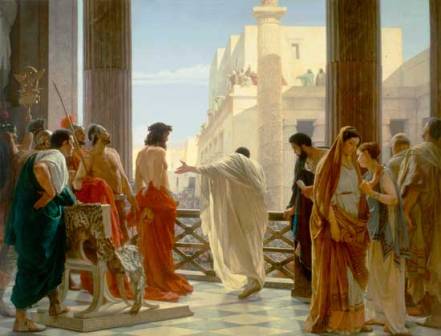
Manhood finds its ultimate expression in our ultimate example. Pilate may not have understood the significance of his words when he brought Jesus forth wearing a crown of thorns and declared, 'Behold the man!' As Elder Christofferson taught, Christ showed us the way to be men by rejecting temptation, by obedience, by forsaking completely the 'natural man', by service, by fearless opposition to evil and error and by standing firm in defending sacred things and raising a warning voice.

What manner of men ought we to be? Even as he is (3 Nephi 27:27, Matthew 5:48, 1 John 3:2).

As once Lehi called upon his sons to awake and rise from the dust and be men, so the prophets of today have called upon the men of our generation to 'step up'. President Monson has reminded us that we are not spectators. Elder Bednar counseled that when men 'neglect to do what is necessary to qualify for priesthood power' their efforts are 'unnaceptable to the Lord'. Elder Uchtdorf called upon men to put into practice dormant doctrines-- those that lie in our hears yet unapplied in our lives-- to qualify ourselves as husbands, fathers and sons.
Rise up, O men of God!
Have done with lesser things.
Give heart and soul and mind and strength
To serve the King of Kings.
Rise up, O men of God,
In one united throng.
Bring in the day of brotherhood
And end the night of wrong.
Rise up, O men of God!
Tread where his feet have trod.
As brothers of the Son of Man,
Rise up, O men of God!

Sunday, October 9, 2011

The Cautionary Tale of James Covill

James Covill had been a baptist minister for about forty years when he approached Joseph Smith just a few days after a conference in Fayette, New York, in 1831. Then and there he covenanted with the Lord that he would obey any command that the Lord gave to him through Joseph Smith the Prophet.

The Lord approved of the covenant of Reverend Covill, saying: "Behold, I say unto you, my servant James, I have looked upon thy works and I know thee. And verily I say unto thee, thine heart is now right before me at this time" (D&C 39:7-8). The Lord responded to the covenant with two commandments, each tied to specific blessings that were conditional on James Covill's fulfillment of the commandment given.

The first commandment was to enter in by the gate; to be baptized and receive the gift of the Holy Ghost. The Lord promises that if James Covill will hearken to this command, God would wash away his sins, provide "a blessing so great as you never have known", and give Mr. Covill a greater work to do.

The second commandment was the greater work promised with the fulfillment of the first: James Covill should be called serve a mission in Ohio. Again conditional blessings are offered for Mr. Covill's obedience. If James Covill would serve a mission and help the Lord keep his covenant to the house of Israel, the Lord promises that "power shall rest upon thee; thou shalt have great faith, and I will be with thee and go before thy face" (v. 12).

In Matthew 13, Christ teaches the parable of the sower. In the parable, seeds that were sewn into good ground grew into plants and brought forth fruit. Yet, some of the seeds that were sewn never grew into plants but were eaten by birds, choked by weeds, or unable to take root because of hard, stony ground. Expounding the parable to his disciples, Christ explained, "he that received the seed into stony places, the same is he that heareth the word, and anon with joy receiveth it; yet hath he not root in himself... [and] when tribulation or persecution ariseth because of the word, by and by he is offended" (v. 20-21).

So it was with James Covill. Speaking of James Covill, the Lord explained to Joseph Smith and Sidney Rigdon that "he received the word with gladness, but straightway Satan tempted him; and the fear of persecution and the cares of the world caused him to reject the word" (D&C 40:2). President Joseph Fielding Smith explained that James Covill "was convinced of the truth... However, when he withdrew from the influence of the Spirit of the Lord and had time to consider the fact that he would lose the fellowship of the world, and his place and position among his associates, he failed and rejected the promises and blessings which the Lord offered him" (Church History and Modern Revelation, 1:174).

Like James Covill, the Lord has extended wonderful promises and blessings to each of us. These blessings are extended through patriarchal and other priesthood blessings; covenants made through baptism, ordination, endowment, and/or marriage; the scriptures, conference talks and modern revelation through living prophets; and personal prayers and covenants with the Lord. These and other blessings are within our grasp, if we will hearken to the voice of the Lord. For "when we obtain any blessing from God, it is by obedience to that law upon which it is predicated" (D&C 130:21, see also D&C 82:10).

We can be like Naaman of old, who obtained his greatest desire and was cured of leprosy by humbly following the word of God given through his prophet, Elisha. Or we can fear the world-- fear losing friends, fear appearing out of step with modern science or 'intellectual' thought, fear the ridicule or persecution of those in the great and spacious building-- and, by letting go of the iron rod that is God's word, forfeit the marvelous blessings the Lord is wanting and ready to give us.

If there is a blessing you desire in your life, I urge you to study and pray to know how you might obtain the righteous desires of your heart. If there is a commandment the Lord has given to you, generally or specifically, I invite you to obey with full vigor of heart and soul that you may see the blessings of God sprout and grow and bear fruit.

I know that God lives, that we are His children, and that he has prepared blessings "so great as [we] have never known" for each of us. For if we know how to give good gifts to our children, "how much more shall your Father which is in heaven give good things to them that ask him" (Matthew 7:11)? The choice is ours.

My hope for you and for me is that we will keep our hearts right before the Lord, filled with faith and courage, that the Lord may prosper you and I with our greatest desires and the riches of eternity through our humble obedience. If we will obey, it will be so.

Monday, July 4, 2011

Choosing to Hearken and Receive

In Alma we read one of the greatest missionary stories of all time as the sons of Mosiah, princes among Nephites, forsake wealth and power to teach the enemy Lamanites about the gospel of Jesus Christ. Their extraordinary success is matched by extraordinary trials as they overcome imprisonment, starvation, disbelief and persecution to teach the gospel. In a moment of joy as they realized together their incredible missionary success, the oldest of these sons, Ammon, declares, "our brethren, the Lamanites, were in darkness, yea, even in the darkest abyss, but behold...thousands of them do rejoice, and have been brought into the fold of God" (Alma 26: 3-4).

Four hundred years later, the prophet Mormon walked among the descendants of Ammon and his brethren, their converts and their once-righteous Nephite nation. Christ had visited the people and they had enjoyed the presence, teachings and miracles of Christ's authorized disciples for nearly three hundred years. Now a wicked people, Mormon writes that he tried to preach to them, "but my mouth was shut, and I was forbidden that I should preach unto them; for behold they had wilfully rebelled against their God" (Mormon 1:16).

In these two examples we see two wicked peoples, with identical family histories, yield two very different responses from the Lord. Ammon and his brethren rejoiced that they had, "been made instruments in the hands of God to bring about this great work" (Alma 26:3). And when "our hearts were depressed, and we were about to turn back," Ammon records, "behold, the Lord comforted us, and said: Go amongst thy brethren, the Lamanites, and bear with patience thine afflictions, and I will give unto you success" (Alma 26:27). Yet Mormon, "was forbidden to preach unto them, because of the hardness of their hearts; and because of the hardness of their hearts the land was cursed for their sake" (Mormon 1:17).

If God loves all of His children, we may wonder why He would bless one people with faith and conversion and curse another and forbid the prophets to preach to them. It may seem unfair or like His love is conditional. Yet the difference between these two societies is not the way they were treated by a God who loves them both, but the way they used their agency to respond to that love.

Both of these peoples had been taught the gospel of Jesus Christ. The wickedness of the Lamanites taught by Ammon was the result of generations of false teachings and disbelief on the part of their ancestors. They were taught the gospel and responded with conversion so pure and so true they were willing to die in a massacre to hold true to their covenants and to their God. The Nephites of Mormon's day were raised in the gospel; their ancestors had beheld Christ with their very own eyes, yet they chose abandon their family legacies for the pleasures of greed, immorality, self-indulgence and rebellion.

So we see the wisdom of God as He teaches us the principles of eternity: "And the mysteries of the kingdom ye shall keep within yourselves; for it is not meet to give that which is holy unto the dogs; neither cast ye your pearls before swine, lest they trample them under their feet. For the world cannot receive that which ye, yourselves, are not able to bear; wherefore ye shall not give your pearls unto them, lest they turn again and rend you" (JST Matthew 7:10-11).

And again, "he that receiveth my gospel receiveth me; and he that receiveth not my gospel receiveth not me. And this is my gospel-- repentance and baptism by water, and then cometh the baptism of fire and the Holy Ghost... The days of thy deliverance are come, if thou wilt hearken to my voice, which saith unto thee: Arise and be baptized, and wash away your sins, calling on my name, and you shall receive my Spirit, and a blessing so great as you have never known" (D&C 39:5-10).

Fourth Century Nephites had already trampled sacred covenants to become the wicked people they were. They were taught the gospel in their homes and they chose to not to receive it, but to discard it and regard it as slop for the pigs. Not many years from the time of Mormon's writing, they even turned against the Church to tear it into pieces and destroy it.

The people of Ammon's time, the self-declared Anti-Nephi-Lehis, hearkened unto the voice of the Lord and were baptized. They wanted nothing more than to be free of their sins and diligent in their faith.

Like the Ammonites and the Nephites of Mormon's time, each of us must decide each day whether we will receive Christ. We must decide whether we will build the foundations of our testimonies on the rock of Jesus Christ and his gospel, or whether we will be overrun and washed away by the world and her philosophies like the wicked Nephites. We must decide if we will be true to our family's legacy of faith, however long or short, or if we will abandon our opportunity and advantage for the excitement of popularity or the world's esteem. We must decide who we will serve: God or mammon.

The decisions the move us closer to Christ or the slippery slope of apostasy come by the dozen every day. The movies we watch, the conversations we have, the offenses we choose, the love we give and the way we use our time are just a few of the daily, if not constant, decisions that pull us one way or the other. If we expect ourselves and our families to be like the people of Ammon, we must learn to hearken to the voice of the Lord as the Ammonites did. As we do so, we will arise to the level of the covenants we have made, our sins will be washed away, we will call upon the name of the Lord, and we shall receive the Spirit of God and blessing so great as we have never known.

Therefore, blessed are they who will repent and hearken unto the voice of the Lord their God; for these are they that shall be saved. Helaman 12:23

Wednesday, September 8, 2010

We Must Raise Our Sights

Recently, I was told something of the sights and sounds of the modern high school. Not a school in the inner city, but a suburban school just a few miles from my house attended by the relative of a relative. It was astonishing to hear how much worse things have become since my own high school graduation eight years ago. The perversions children and teens see in their schools each day are the same abominations that destroyed Sodom and Gomorrah, worse than those that brought Noah’s flood and comparable to any dark corner of the world.

The leaders of the Church see and have foreseen the severe tests that face our youth. In 2001, Elder Henry B. Eyring taught religious educators that “the world in which our students choose spiritual life or death is changing rapidly… The spiritual strength sufficient for our youth to stand firm just a few years ago will soon not be enough. Many of them are remarkable in their spiritual maturity and in their faith. But even the best of them are sorely tested. And the testing will become more severe.”

This is an ominous prediction for the future generations. Thankfully, prophetic leaders like Elder Eyring have also taught us how to shore up the spiritual strength of our youth-- and ourselves-- against the severe tests that “will become a torrent of sounds and sights and sensations that invite temptation and offend the spirit of God.” The place to begin, he explains, is with our “vision of what we seek” in the lives of our youth.

“We must raise our sights… The pure gospel of Jesus Christ must go down into the hearts of students by the power of the Holy Ghost. It will not be enough for them to have had a spiritual witness of the truth and to want to do good things later. It will not be enough for them to hope for some future cleansing and strengthening. Our aim must be for them to become truly converted to the restored gospel of Jesus Christ while they are with us. Then they will have gained a strength from what they are, not only from what they know…

“What we seek for our students is that change… True conversion depends on a student seeking freely in faith, with great effort and some pain. Then it is the Lord who can grant, in His time, the miracle of cleansing and change. Each person starts from a different place, with a different set of experiences, and so a different need for cleansing and for change. The Lord knows that place and so only He can set the course.”


Members of the Church, particularly our youth, can protect ourselves against the difficult world around us by becoming converted to the gospel of Jesus Christ. As parents or in our callings, we can help strengthen our families and wards by teaching the pure gospel in plain simplicity. Pure and simple gospel teaching requires more of us—we must know the scriptures better and be more worthy of the Holy Ghost-- but the gospel will be relayed more powerfully as we teach with plainness. The Holy Ghost will carry the truth down into the hearts of our youth.

“But there is more. We can raise our sights by adding greater faith that the change promised by the Lord will come to our students… Faith is not simply to know God could do something. Faith is to know He will.”


The Lord will change the hearts of all those who diligently seek Him. He has intentionally given us experiences and relationships that will help us come to a converted conclusion. We must take advantage of the opportunities He gives us to build our faith, and we must be careful to fulfill our role in the conversion of those around us, particularly the youth of the Church.

Yes, the world is getting tougher. But we can help those coming after us to face it. We need only raise our sights.