We all need sleep. Everyone knows that is a fact of biology and physiology. In truth, those reasons are secondary to the most important reason for sleep: spirituality.
Sleep is often overlooked as a spiritual concept, perhaps because the Lord directly speaks of it only briefly in scripture. Most of what we find is summarized in this short verse: 'cease to sleep longer than is needful; retire to thy bed early, that ye may not be weary; arise early, that your bodies and your minds may be invigorated' (D&C 88:124).
Yet the amount of sleep we receive can affect our decision making in a way that could have dire spiritual consequences. Consider how many times you may have been ornery with someone you love because you were tired. Have you ever been tempted with something that isn't normally a concern because your body was exhausted? How many times have you indulged your carnal self with laziness, unnecessary eating or other selfish acts because you were tired? Has fatigue ever convinced you not to do something you should, like reading your scriptures, helping a neighbor or saying your prayers?
King Benjamin taught that he, 'cannot tell you all the things whereby ye may commit sin; for there are divers ways and means', but that we must, 'watch [ourselves], and [our] thoughts, and [our] words, and [our] deeds, and observe the commandments of God, and continue in the faith of what ye have heard concerning the coming of our Lord, even unto the end of your lives' (Mosiah 4:29-30).
As teenagers our parents asked us to be home at a time we may have considered early because they knew that being tired would make it harder to leave a bad movie, resist peer pressures and control our crazy teenage hormones. As adults who often tire more quickly, we must continue to 'watch ourselves'. We may find it more difficult to change the channel, act with patience toward our families, or fulfill our many responsibilities if we don't hold ourselves, as much as possible, to the standard of early bedtimes the Lord requires in scripture.
Sometimes we try to deceive ourselves into thinking we are more awake than we really are. Taking stimulants such as caffeine, for example, can cause a hormonal response that makes us feel alert while our body and mind are still suffering from fatigue. This can be dangerous as we begin to perceive we are making sound decisions when our mind is actually clouded. Over time these stimulants can add significant stress to our bodies, reduce our natural ability to sleep and lead to addiction, exhaustion, patterns of poor decision making and even a shorter lifespan.
The Lord promises (and if you're interested, science has also found) that if we will go to bed early and get enough sleep, our bodies and minds will be invigorated. We will be best able to make decisions that could improve our health, our relationships, our devotion and the quality of our lives. It is worth our time and effort to arrange our schedules to obey the Lord's direction and allow for a good night's rest.
Wednesday, July 25, 2012
Saturday, July 21, 2012
The Baptism of Jesus Christ
In the third chapter of Matthew we read of the baptism of Jesus Christ. Our Savior approached John the Baptist, his cousin, who had the priesthood authority to baptize. John had just explained to his disciples that his baptism was unto repentance and that more was to come from someone more authorized than himself.
Then cometh Jesus from Galilee to Jordan unto John, to be baptized of him. But John forbad him, saying, I have need to be baptized of thee, and comest thou to me? And Jesus answering said unto him, Suffer it to be so now: for thus it becometh us to fulfil all righteousness. Then he suffered him. And Jesus, when he was baptized, went up straightway out of the water: and, lo, the heavens were opened unto him, and he saw the Spirit of God descending like a dove, and lighting upon him: And lo a voice from heaven, saying, This is my beloved Son, in whom I am well pleased.
As John learned at the baptism of Christ, there is more to baptism than repentance only. It is true that baptism washes away our sin, but it does so because with our immersion in water we enter into a certain covenant. We promise God that we will be willing to take upon ourselves the name of Christ, always remember him and keep his commandments. God promises us the gift of the Holy Ghost.
The key phrases in that covenant are that we are willing and that we take upon ourselves the name of Christ. I've written about willingness before here. Taking upon ourselves the name of Christ includes, among other things, literally accepting his name just as a bride accepts the name of her groom. Just as the union of two people by marriage allows them to be seen legally and otherwise as one family unit, the union of individuals to Christ by baptism allows us to be seen by the laws of God as one unit together with Christ.
Our baptism is the covenant by which we can become unified with Christ and, therefore, judged as one with him if we keep the rest of the covenant, i.e. if we remain willing and obedient. As fallen men and women, each of whom has committed sin(s), this is the only way we may be judged worthy to enter God's kingdom.
That is a little different story for our Savior, Jesus Christ. Free from the burdens of sinful disobedience, he was the only person with the capacity and power to return to live with God independent of outside assistance. He did not need baptism to be clean from sin. So why was he baptized?
Christ told John he was baptized to, 'fulfil all righteousness'. Nephi had the same answer, noting only the valuable example it would provide for the rest of us:
And now, if the Lamb of God, he being holy, should have need to be baptized in water, to fulfil all righteousness, O then, how much more need have we, being unholy, to be baptized, yea, even by water!... But notwithstanding he being holy, he showeth unto the children of men that, according to the flesh he humbleth himself before the Father, and witnesseth unto the Father that he would be obedient unto him in keeping the commandments (2 Nephi 31:5, 7)
Righteousness refers to actions that are justified with or pleasing to God. The opposite of sin, righteousness simply means acting according to the will of God. Fulfilling all righteousness would then be doing everything according to the will of God. It is perfect righteousness.
Christ completed his mission to fulfill all righteousness. Even in the excruciating moments of Gethsemane, he prayed, 'O my Father, if this cup may not pass away from me, except I drink it, thy will be done' (Matthew 26:42). He did everything God asked of Him-- yet, that doesn't seem to completely explain why a perfect man, our Creator and Savior, was baptized.
Perhaps Christ was not baptized for repentance, but rather to enter into the same covenant that we do when we are baptized. A bride cannot be married if the groom is not present. Perhaps he covenanted with God to give his name to us-- even to suffer, bleed and die for us-- if we would be willing to accept it through our individual faith, repentance, baptism, gift of the Holy Ghost and enduring to the end. As a bride and groom entering the marriage covenant, perhaps Christ was baptized because He loves us dearly and wants to help and guide and provide for us.
These are only my thoughts, so perhaps some caution would be wise. Yet in them reside a few certain truths: Jesus Christ is our Savior and our perfect example, he was baptized by immersion by someone authorized to do so, he loves each of us and he wants us to return to live with our Heavenly Father. This can only happen if we follow his example:
And whoso believeth in me, and is baptized, the same shall be saved; and they are they who shall inherit the kingdom of God. And whoso believeth not in me, and is not baptized, shall be damned. Verily, verily, I say unto you, that this is my doctrine, and I bear record of it from the Father (3 Nephi 11: 33-35).
Then cometh Jesus from Galilee to Jordan unto John, to be baptized of him. But John forbad him, saying, I have need to be baptized of thee, and comest thou to me? And Jesus answering said unto him, Suffer it to be so now: for thus it becometh us to fulfil all righteousness. Then he suffered him. And Jesus, when he was baptized, went up straightway out of the water: and, lo, the heavens were opened unto him, and he saw the Spirit of God descending like a dove, and lighting upon him: And lo a voice from heaven, saying, This is my beloved Son, in whom I am well pleased.As John learned at the baptism of Christ, there is more to baptism than repentance only. It is true that baptism washes away our sin, but it does so because with our immersion in water we enter into a certain covenant. We promise God that we will be willing to take upon ourselves the name of Christ, always remember him and keep his commandments. God promises us the gift of the Holy Ghost.
The key phrases in that covenant are that we are willing and that we take upon ourselves the name of Christ. I've written about willingness before here. Taking upon ourselves the name of Christ includes, among other things, literally accepting his name just as a bride accepts the name of her groom. Just as the union of two people by marriage allows them to be seen legally and otherwise as one family unit, the union of individuals to Christ by baptism allows us to be seen by the laws of God as one unit together with Christ.
Our baptism is the covenant by which we can become unified with Christ and, therefore, judged as one with him if we keep the rest of the covenant, i.e. if we remain willing and obedient. As fallen men and women, each of whom has committed sin(s), this is the only way we may be judged worthy to enter God's kingdom.
That is a little different story for our Savior, Jesus Christ. Free from the burdens of sinful disobedience, he was the only person with the capacity and power to return to live with God independent of outside assistance. He did not need baptism to be clean from sin. So why was he baptized?
Christ told John he was baptized to, 'fulfil all righteousness'. Nephi had the same answer, noting only the valuable example it would provide for the rest of us:
And now, if the Lamb of God, he being holy, should have need to be baptized in water, to fulfil all righteousness, O then, how much more need have we, being unholy, to be baptized, yea, even by water!... But notwithstanding he being holy, he showeth unto the children of men that, according to the flesh he humbleth himself before the Father, and witnesseth unto the Father that he would be obedient unto him in keeping the commandments (2 Nephi 31:5, 7)
Righteousness refers to actions that are justified with or pleasing to God. The opposite of sin, righteousness simply means acting according to the will of God. Fulfilling all righteousness would then be doing everything according to the will of God. It is perfect righteousness.
Christ completed his mission to fulfill all righteousness. Even in the excruciating moments of Gethsemane, he prayed, 'O my Father, if this cup may not pass away from me, except I drink it, thy will be done' (Matthew 26:42). He did everything God asked of Him-- yet, that doesn't seem to completely explain why a perfect man, our Creator and Savior, was baptized.
Perhaps Christ was not baptized for repentance, but rather to enter into the same covenant that we do when we are baptized. A bride cannot be married if the groom is not present. Perhaps he covenanted with God to give his name to us-- even to suffer, bleed and die for us-- if we would be willing to accept it through our individual faith, repentance, baptism, gift of the Holy Ghost and enduring to the end. As a bride and groom entering the marriage covenant, perhaps Christ was baptized because He loves us dearly and wants to help and guide and provide for us.
These are only my thoughts, so perhaps some caution would be wise. Yet in them reside a few certain truths: Jesus Christ is our Savior and our perfect example, he was baptized by immersion by someone authorized to do so, he loves each of us and he wants us to return to live with our Heavenly Father. This can only happen if we follow his example:
And whoso believeth in me, and is baptized, the same shall be saved; and they are they who shall inherit the kingdom of God. And whoso believeth not in me, and is not baptized, shall be damned. Verily, verily, I say unto you, that this is my doctrine, and I bear record of it from the Father (3 Nephi 11: 33-35).
Wednesday, July 4, 2012
Thursday, June 21, 2012
As I Have Loved You
The scriptures tell us that 'God so loved the world that he gave his only begotten Son' (John 3:16). This divine gift made possible the resurrection of mankind and the salvation of the faithful. We are taught by the Savior that we may 'come unto him' and be perfected, allowing us to return to the presence of our Heavenly Father, if we will exercise faith, repent, be baptized by immersion for the remission of sins, receive the gift of the Holy Ghost and endure to the end.
As a part of our baptismal covenant we make with God, we promise to be willing to keep his commandments. It was this topic that brought an inquiring lawyer to Christ in Matthew 22. 'Master,' he asked, 'which is the great commandment in the law?'
Jesus answered, 'Thou shalt love the Lord thy God with all thy heart, and with all thy soul, and with all thy mind. This is the first and great commandment. And the second is like unto it, Thou shalt love thy neighbor as thyself. On these two commandments hang all the law and the prophets' (Matthew 22:36-40).
Love of God is a natural result of obedience and sincere seeking. Christ taught, 'If ye love me, keep my commandments' (John 14:15) . As we pray and study the scriptures our desires change, our behaviors follow, and we learn to love God and the fruits of obedience.
Our obligation to our fellow man can sometimes seem much more complicated, despite being extremely well outlined in scripture. Consider this familiar passage from the Sermon on the Mount:
Ye have heard that it hath been said, An eye for an eye, and a tooth for a tooth: But I say unto you, That ye resist not evil: but whosoever shall smite thee on thy right cheek, turn to him the other also. And if any man will sue thee at the law, and take away thy coat, let him have thy cloke also. And whosoever shall compel thee to go a mile, go with him twain. Give to him that asketh thee, and from him that would borrow of thee turn not thou away.
Ye have heard that it hath been said, Thou shalt love thy neighbor, and hate thine enemy. But I say unto you, Love your enemies, bless them that curse you, do good to them that hate you, and pray for them which despitefully use you, and persecute you; That ye may be the children of your Father which is in heaven (Matthew 5:38-45).
Other scriptures invite us to 'forgive men their trespasses', 'judge not' and treat others how we would like to be treated. Christ explained our obligation to our fellow man this way:
A new commandment I give unto you, That ye love one another; as I have loved you, that ye also love one another. By this shall all men know that ye are my disciples, if ye have love one to another (John 13:34-35).
Though we understand the principle generally, we all fail from time to time in our efforts to love one another as broadly and as genuinely as the Lord requires of us. Each of us behaves at times as though loving others is just one of the ways we should treat others instead of the only way.
The truth is that God has never given us permission to get angry at a bad driver, make fun of another person's mistake or roll our eyes at the lady holding up the grocery store line with a big stack of coupons. We are not called to keep order in the universe through micromanaging, controlling or intimidating others to do what we want. Nor is the Lord pleased when we are harsh, critical, sarcastic, patronizing, scolding or negative in any way to our brothers and sisters with whom we share our time on earth.
Even the best intentions cannot justify these behaviors. Elder H. Burke Peterson once explained it this way, referring to criticism specifically:
I personally have a hard time with people who say they believe in constructive criticism. My experience does not lead me to believe there is such a thing. My point of view is that criticism has a connotation that does not come from above. I think it is important to note that correction is different from criticism. The Lord discussed correction in his revelation to the Prophet Joseph Smith. He emphasized that any corrections are to be performed when 'moved upon by the Holy Ghost.' If we are inspired to chastise, however, the Lord insists that there be 'an increase of love toward him whom thou hast reproved, lest he esteem thee to be his enemy.'
Criticism is more judgment-oriented than correction, and most of us do not have sufficient knowledge to be critical of others--especially of a spouse and children who are still growing and developing as we are ('Eternal Companions:Advice from LDS Counselors and Educators on Building a Forever Marriage', 4).
So the Lord warns us that it is the 'nature and disposition of almost all men', and it's not a stretch to include many women here also, to 'exercise unrighteous dominion' at every opportunity. That reminder of our natural shortcomings is followed by this profound doctrine referenced by Elder Peterson:
No power or influence can or ought to be maintained by virtue of the priesthood, only by persuasion, by long-suffering, by gentleness and meekness, and by love unfeigned; By kindness and pure knowledge, which shall greatly enlarge the soul without hypocrisy, and without guile-- Reproving betimes with sharpness, when moved upon by the Holy Ghost; and then showing forth afterwards an increase of love toward him whom thou hast reproved, lest he esteem thee to be his enemy (D&C 121:39-43).
These verses teach us again that we we should treat those around us with kindness, gentleness, meekness and sincerity-- or, in other words, with love. This is the second great commandment behind loving God.
Loving others doesn't mean the world will seem like springtime all the time. Sometimes love means correcting or teaching those for whom we have stewardship just as God chastises those whom he loves. Sometimes love means we will ache as we allow our loved ones use their agency, especially when mistakes seem to us like they could have been avoided or prevented.
Sometimes our loved ones may not appreciate how we show our love or may feel that we cannot love them without also accepting their wrong or sinful behaviors. We don't ever have to compromise gospel standards to have love for those who may not share the same ideals-- it is God who gives us love, after all. If we have genuine love for others, we will love them as Christ loves us. We will be patient and kind. We will disagree and even correct, where appropriate, without becoming hostile.
What matters in the end is whether we have been striving to keep the commandments to love God and love our fellow man. As we dedicate our hearts, minds and strength to this effort, let us consider how well we love those around us. Can our spouse feel our love by the way we treat them? Do we allow love to guide our parenting instead of our own preferences, convenience and comfort? Do our coworkers enjoy being around us because of the way they are treated? Are those we do not yet know pleased to meet us because of the way we make them feel?
God gave his Only Begotten because he loves us. His gift makes it possible to inherit all that he has. He asks in return that we strive to be like him-- to love others as he loves them, not as only one way we can treat them but as the only way. As we obey the command to love our fellow man, we will also find that our love of God will increase and we will become true disciples.
By this shall all men know that ye are my disciples, if ye have love one to another.
As a part of our baptismal covenant we make with God, we promise to be willing to keep his commandments. It was this topic that brought an inquiring lawyer to Christ in Matthew 22. 'Master,' he asked, 'which is the great commandment in the law?'
Jesus answered, 'Thou shalt love the Lord thy God with all thy heart, and with all thy soul, and with all thy mind. This is the first and great commandment. And the second is like unto it, Thou shalt love thy neighbor as thyself. On these two commandments hang all the law and the prophets' (Matthew 22:36-40).
Love of God is a natural result of obedience and sincere seeking. Christ taught, 'If ye love me, keep my commandments' (John 14:15) . As we pray and study the scriptures our desires change, our behaviors follow, and we learn to love God and the fruits of obedience.
Our obligation to our fellow man can sometimes seem much more complicated, despite being extremely well outlined in scripture. Consider this familiar passage from the Sermon on the Mount:
Ye have heard that it hath been said, An eye for an eye, and a tooth for a tooth: But I say unto you, That ye resist not evil: but whosoever shall smite thee on thy right cheek, turn to him the other also. And if any man will sue thee at the law, and take away thy coat, let him have thy cloke also. And whosoever shall compel thee to go a mile, go with him twain. Give to him that asketh thee, and from him that would borrow of thee turn not thou away.Ye have heard that it hath been said, Thou shalt love thy neighbor, and hate thine enemy. But I say unto you, Love your enemies, bless them that curse you, do good to them that hate you, and pray for them which despitefully use you, and persecute you; That ye may be the children of your Father which is in heaven (Matthew 5:38-45).
Other scriptures invite us to 'forgive men their trespasses', 'judge not' and treat others how we would like to be treated. Christ explained our obligation to our fellow man this way:
A new commandment I give unto you, That ye love one another; as I have loved you, that ye also love one another. By this shall all men know that ye are my disciples, if ye have love one to another (John 13:34-35).
Though we understand the principle generally, we all fail from time to time in our efforts to love one another as broadly and as genuinely as the Lord requires of us. Each of us behaves at times as though loving others is just one of the ways we should treat others instead of the only way.
The truth is that God has never given us permission to get angry at a bad driver, make fun of another person's mistake or roll our eyes at the lady holding up the grocery store line with a big stack of coupons. We are not called to keep order in the universe through micromanaging, controlling or intimidating others to do what we want. Nor is the Lord pleased when we are harsh, critical, sarcastic, patronizing, scolding or negative in any way to our brothers and sisters with whom we share our time on earth.
Even the best intentions cannot justify these behaviors. Elder H. Burke Peterson once explained it this way, referring to criticism specifically:
I personally have a hard time with people who say they believe in constructive criticism. My experience does not lead me to believe there is such a thing. My point of view is that criticism has a connotation that does not come from above. I think it is important to note that correction is different from criticism. The Lord discussed correction in his revelation to the Prophet Joseph Smith. He emphasized that any corrections are to be performed when 'moved upon by the Holy Ghost.' If we are inspired to chastise, however, the Lord insists that there be 'an increase of love toward him whom thou hast reproved, lest he esteem thee to be his enemy.'
Criticism is more judgment-oriented than correction, and most of us do not have sufficient knowledge to be critical of others--especially of a spouse and children who are still growing and developing as we are ('Eternal Companions:Advice from LDS Counselors and Educators on Building a Forever Marriage', 4).
So the Lord warns us that it is the 'nature and disposition of almost all men', and it's not a stretch to include many women here also, to 'exercise unrighteous dominion' at every opportunity. That reminder of our natural shortcomings is followed by this profound doctrine referenced by Elder Peterson:
No power or influence can or ought to be maintained by virtue of the priesthood, only by persuasion, by long-suffering, by gentleness and meekness, and by love unfeigned; By kindness and pure knowledge, which shall greatly enlarge the soul without hypocrisy, and without guile-- Reproving betimes with sharpness, when moved upon by the Holy Ghost; and then showing forth afterwards an increase of love toward him whom thou hast reproved, lest he esteem thee to be his enemy (D&C 121:39-43).
These verses teach us again that we we should treat those around us with kindness, gentleness, meekness and sincerity-- or, in other words, with love. This is the second great commandment behind loving God.
Loving others doesn't mean the world will seem like springtime all the time. Sometimes love means correcting or teaching those for whom we have stewardship just as God chastises those whom he loves. Sometimes love means we will ache as we allow our loved ones use their agency, especially when mistakes seem to us like they could have been avoided or prevented.
Sometimes our loved ones may not appreciate how we show our love or may feel that we cannot love them without also accepting their wrong or sinful behaviors. We don't ever have to compromise gospel standards to have love for those who may not share the same ideals-- it is God who gives us love, after all. If we have genuine love for others, we will love them as Christ loves us. We will be patient and kind. We will disagree and even correct, where appropriate, without becoming hostile.
What matters in the end is whether we have been striving to keep the commandments to love God and love our fellow man. As we dedicate our hearts, minds and strength to this effort, let us consider how well we love those around us. Can our spouse feel our love by the way we treat them? Do we allow love to guide our parenting instead of our own preferences, convenience and comfort? Do our coworkers enjoy being around us because of the way they are treated? Are those we do not yet know pleased to meet us because of the way we make them feel?
God gave his Only Begotten because he loves us. His gift makes it possible to inherit all that he has. He asks in return that we strive to be like him-- to love others as he loves them, not as only one way we can treat them but as the only way. As we obey the command to love our fellow man, we will also find that our love of God will increase and we will become true disciples.
By this shall all men know that ye are my disciples, if ye have love one to another.
Sunday, June 17, 2012
Saturday, June 9, 2012
Be A Man!
In the most recent general conference, Elder Jeffrey R. Holland made an appeal to the men to, 'step up' and 'be men'. The call to 'be a man', colloquially and sometimes humorously used to motivate a burst of courage, was anything but a joke to Elder Holland.
What does it mean to be a man? The conclusion we come to may depend on who we ask. The world around us sends an ever-changing message on what manhood is. Not many years ago that message was based on grit, toughness and persistence. Clint Eastwood, Rocky Balboa and the generals of World War II were held up as 'real men'.
Now that image of manhood is considered cliche and old fashioned. The world's next attempt to define manhood pointed to the extremely successful-- the Bill Gates' of society who have every want satisfied with money to spare. Just as non-butch young men struggled with the previous definition of manhood, many in the rising generation have become discouraged by worldly pressures to provide an unrealistic level of income for themselves or their families.
Yet modern man, in the world's view, has evolved beyond the role of provider to something much less responsible. Elder D. Todd Christofferson explained it this way:
Some act as if man's highest goal should be his own pleasure. Permissive social mores have 'let men off the hook' as it were, so that many think it acceptable to father children out of wedlock and cohabit rather than marry. Dodging commitments is considered smart, but sacrificing for the good of others, naive.
The elusive, constantly changing messages of what the world calls manhood miss the target entirely and seek only to toss men 'to and fro with every wind of doctrine', as it were. These definitions attempt to restrict men to the selfish impulses of their carnal natures-- the very natures which stand in opposition to God (see Mosiah 3:19, Jeremiah 17:5, D&C 3:7, Moses 1:10).
So we're left again to ask what it means to be a man. The gospel of Jesus Christ provides a firm foundation upon which men can build their identity as men.
The scriptures teach that men are made in the image of God-- literal sons of God, eternal in nature and the focal point of God's glory. Men are called to be stewards over the whole earth and trusted to care for our sisters, daughters of the Most High. Every man has within himself the potential to be like our Heavenly Father, heirs of all He has and able to overcome every obstacle that may fall into our path. Real men, the gospel teaches, are mature, cheerful people who respond to the call to preside and provide.
Modern prophets also show the way to be a man. Elder Christofferson said, 'It is a wonderful aspiration for a boy to become a man--strong and capable; someone who can build and create things, run things; someone who makes a difference in the world.' Citing the proclamation on the family, he continued, 'In large measure, true manhood is defined in our relationship to women'. Real men honor marital vows with complete fidelity, help rear their children, preside with in love and righteousness and take responsibility to provide the necessities of life and protection for their families.
Elder Christofferson had a few more things to say about manhood:
Integrity is fundamental to being men. Integrity means being truthful, but it also means accepting responsibility and honoring commitments and covenants... A man of integrity will honestly face and correct his mistakes... True manhood is not always measured by the fruits of one's labors but by the labors themselves-- by one's striving. Though he will make some sacrifices and deny himself some pleasures in the course of honoring his commitments, the true man leads a rewarding life. He gives much, but he receives more, and he lives content in the approval of his Heavenly Father. The life of true manhood is the good life.
President Kimball once quoted U.S. President J. Edgar Hoover's answer to what makes a real man:
There are many things, but perhaps the inner voice he listened to as a young boy was most important of all. That voice we call conscience, and it directs one’s thoughts. What one thinks may find expression in actions. Since repeated actions form habits, the thoughts you are thinking and the things you are doing at this moment tend to reveal the kind of a man you will be.
Were I asked what a boy needs to do today in order to be a man
worthy of the name tomorrow, I would say: Never lie and never cheat. A
liar is a weakling. A cheat is both a weakling and a thief. In finding
the courage to honor truth in all things, you are on the way to
self-mastery.
Work
hard. Your mind is a storehouse and you stock the shelves. Stock them
with quality goods. Remember that the habits of work and study you form
today are the ones you will live with tomorrow.
Have
fun. Play active games which require stamina and sportsmanship. Abide
by the rules yourself. Demand that others do likewise.
Honor
your Creator. God is the source of all good. The ideals on which the
nation is founded stem from him who is the author of Liberty. You can
express appreciation for your priceless heritage best by living
according to the code of ‘Duty, Honor, Country, and God.’
If
you do these, and in all things do your best, the mind and heart and
soul you develop will one day be those of a real man.
These are the ideals of manhood: integrity, kindness, strength, honor and duty.
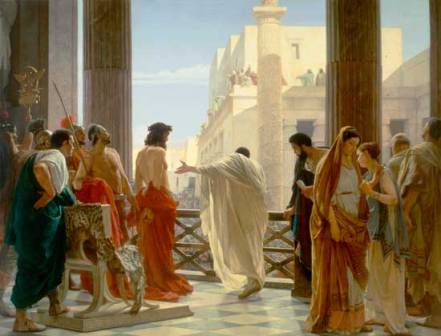
Manhood finds its ultimate expression in our ultimate example. Pilate may not have understood the significance of his words when he brought Jesus forth wearing a crown of thorns and declared, 'Behold the man!' As Elder Christofferson taught, Christ showed us the way to be men by rejecting temptation, by obedience, by forsaking completely the 'natural man', by service, by fearless opposition to evil and error and by standing firm in defending sacred things and raising a warning voice.
As once Lehi called upon his sons to awake and rise from the dust and be men, so the prophets of today have called upon the men of our generation to 'step up'. President Monson has reminded us that we are not spectators. Elder Bednar counseled that when men 'neglect to do what is necessary to qualify for priesthood power' their efforts are 'unnaceptable to the Lord'. Elder Uchtdorf called upon men to put into practice dormant doctrines-- those that lie in our hears yet unapplied in our lives-- to qualify ourselves as husbands, fathers and sons.
Rise up, O men of God!
Have done with lesser things.
Give heart and soul and mind and strength
To serve the King of Kings.
Rise up, O men of God,
In one united throng.
Bring in the day of brotherhood
And end the night of wrong.
Rise up, O men of God!
Tread where his feet have trod.
As brothers of the Son of Man,
Rise up, O men of God!
Saturday, June 2, 2012
Subscribe to:
Posts (Atom)